• Skip to main content
  • Skip to primary sidebar

Original Impulse HomepageOriginal Impulse

  • The Writing Life
    • Coaching for writers
    • Write ON
    • The Busy Woman’s Guide to Writing a Book
    • Blog
  • Workshops
    • Events
    • An Illustrated Feast
    • Paris Sketchbook
    • Write ON
  • Speaking
  • Books
    • Her Lisbon Colors
    • Client Books
    • Books for Creatives
    • Book Recommendations
  • About
    • About Cynthia
    • Successful Clients
    • Media
  • Contact

Creativity

May 3, 2021 by Cynthia Morris Leave a Comment

Three Gorgeous Things: Inspiration for Creatives

The library reopened! Finally, I am able to return to my happy place and discover new things and people. I can enjoy a visit in less than 15 minutes, which feels safe to me. I love peeking at the magazines.

Last month I checked out Cook’s Illustrated. I’ve known about this magazine forever. I fell in love at the table of contents and editor’s note. There are no ads; instead, the pages are filled with enticing recipes, thoughtful articles and lovely illustrations. I slipped the subscription card to Steve and hinted that this would make a great birthday present. 

Artist Grief Deck

I have no idea where I found The Artist’s Grief Deck, but I knew I had to have it. When have we learned how to grieve? Who knows how to make space for all the things we’ve lost this year? Each card has a piece of art and on the back, a prompt. The prompts invite us to explore our grief through art, action, meditations, or writing. I love it.

Every other minute I was ooing and ahhing during My Octopus Teacher. It was so gorgeous and heart-opening. The story was so well-told. I was curious about how it was made. I found an article that explains in detail how it was conceived, filmed, written, and funded.

Reading this article showed me how challenging it is to pull a unified story together. This is exactly what I help my clients with; knowing which stories to tell and how.

I hope these things bring you joy, my friends.

Filed Under: Books for Creatives, Creativity

April 20, 2021 by Cynthia Morris 1 Comment

Plan for your success – it’s more fun than you think!

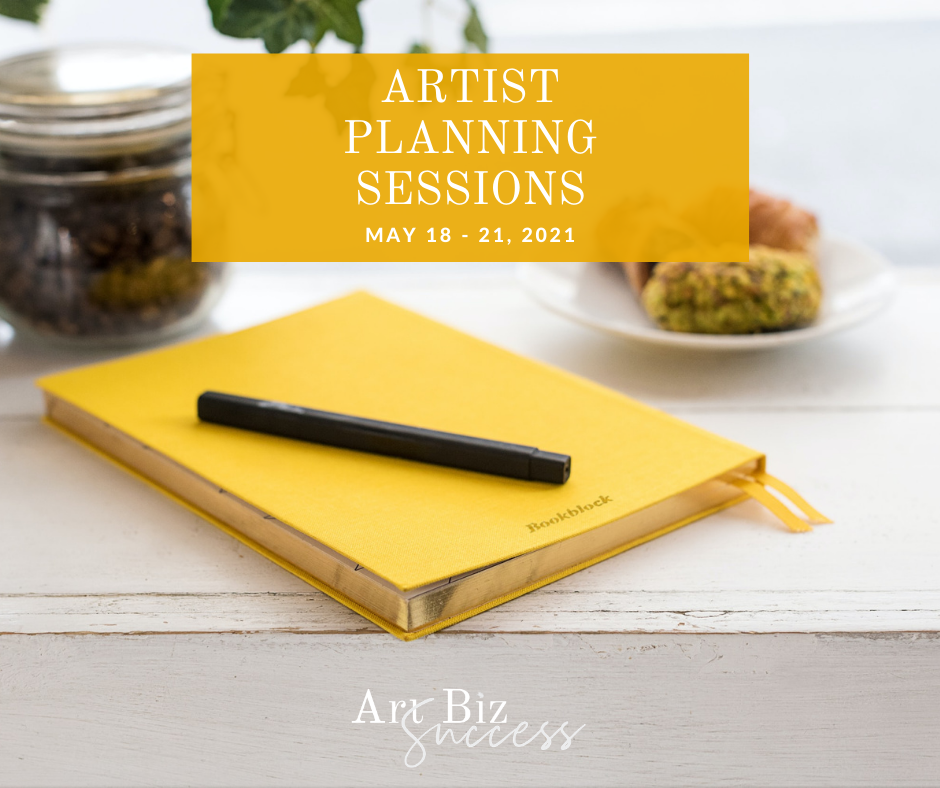
My friend and colleague Alyson Stanfield of Art Biz Success is offering a wonderful planning workshop for artists. If you are overwhelmed by possibilities and don’t know what to do next to ensure your art business success, this is a great, affordable class.

And Alyson makes it fun, too!

Click the image below for all the details.

Affiliate links are included in this post.

Filed Under: Creativity

April 15, 2021 by Cynthia Morris 3 Comments

The Painful Final Laps of a Creative Project

Recently, I was in the final lap of writing the curriculum for Write Your Travel Stories. I just needed to pull together the final lessons. Then one final polish to make sure it was all in place.

I had been making great weekly progress, with accountability from my Atelier members. But suddenly, with the end in sight, sitting down to do the work became difficult.

While spring’s glorious distractions didn’t help, I knew it was more than that. I was experiencing what awaits many of us in the final phase of a project.

I know very well how difficult the last bits are. For all the books, programs, and projects I have made and launched into the world, I have waded through the brambles in the final, painful phase. There’s something about the last 15% of a project that just feels so difficult.

Are you one of those people who can’t seem to finish your creative projects? Books, blog posts, art pieces…no matter what you try, the finish line remains an elusive land you can’t seem to access.

Why, why? Are you simply lazy, inept and perhaps stupid? I doubt it. Here are the main things I see that prevent us from completing our projects.

  • We face the reality about the quality of the work. Is it good enough?
  • We struggle with detail management – not my strongest suit and maybe not yours either.
  • We get closer to hearing the opinions of others. How will our work be received?
  • We’re forced to make final decisions. Making decisions can be a challenge for us; we have to commit for one last time. Doubts can peck at us when making these last choices.
  • We don’t know how to let go of our identity as someone who doesn’t finish things.

Recognize yourself in any of this? I have heard countless people claim that they are not finishers. It becomes a sort of identity, and believing that we cannot finish things becomes another way to beat ourselves up.

What’s happening? The further into the creative process you go, the more restrictive the space feels, and the more you are required to deal with the emotional eddies that swirl under the surface of your creative life. Everything that quietly prevented us from creating now shouts loud and clear. It gets more and more painful to even think about your once-beloved project. Check out the video I made about this.

If only it were as simple as telling yourself to JUST DO IT! And wouldn’t it be great if our apps and hacks could get us across the finish line?! Yet there is no app yet that addresses what’s really going on under the surface that keeps us from completing.

You’re not a fool for feeling these things, and you’re certainly not alone. The work of creating calls us forth in deeply powerful and challenging ways. We often need to address our doubts and fears in order to get things done.

I hope this has helped to normalize the challenges you face at the end of a project.

What resonates with you? Do you struggle with finishing things?

Filed Under: Creativity

February 12, 2021 by Cynthia Morris Leave a Comment

Four Valentine’s Goodies for Your Muse

Life-Changing TEDx talk

Sakinah Hofler’s creative writing tutorial makes an unlikely exceptional TED talk. This TEDx talk is profound and the best thing I have seen/heard about writing in my entire writing life.

Watch it here. 

Haiku book and workshop

I just finished reading Natalie Goldberg’s latest book, Three Simple Lines: A Writer’s Pilgrimage into the Heart and Homeland of Haiku. It’s a delightful chance to visit Japan with its haiku masters in the lead. Natalie shares her decades-long study of haiku in a way that inspires me to write a few haiku myself.

I’m studying Japanese arts and culture this year, so the book was great armchair travel. Natalie is one of my main creative ancestors; her Writing Down the Bones paved the way for my entire writing life and work as a writing coach. I’m always happy to read her books.

She mentioned a haiku workshop she teaches at Upaya Zen Center in NM, so I looked it up. Lo and behold, she’s co-teaching a haiku workshop the weekend of February 19-21. It’s online and donation-based. I signed up and can’t wait.

I feel compelled to spread the word and thought there may be some among us here who want to join. Here’s the info for the class.

Web show turned book

The web show Uncomfortable Conversations with a Black Man by Emmanuel Acho is great. I heard Emmanuel on Unlocking Us, Brené Brown’s podcast. I can’t stop thinking about him and his ideas. He’s also got a book of the same name.

Podcast with a master writer

I love Tim Ferriss’ podcast. In the last five years or so, he’s gotten less bro and more heart-centered. The people he interviews are almost always fascinating.

This episode with American great author Joyce Carol Oates is full of nuggets. Almost from the start, she was saying things that relate to the challenges my clients and students face. Must-listen for writers.

Filed Under: Books for Creatives, Creativity

February 2, 2021 by Cynthia Morris 12 Comments

20 Years of Publishing Impulses: Inspiration for Writers and Creatives

Join me in the way-back machine for the origin story of my newsletter, Impulses: Inspiration for Creatives.

February 2001 was a big month for me. I left my job at the local cooking school. This was the last job I will ever hold. I took a trip to Paris with my friend Carl. The city was cold, a constant light mist fell upon us, but it’s Paris. I’ll take it.

There was a moment where I felt a visceral confusion: what am I doing? My business was almost two years old. I had no job. Would I be able to support myself? What is this coaching thing, anyway?

That month, I began writing and publishing Impulses. This is before blogs. Before Instagram, Facebook, or any of those mass communication channels. A newsletter is the way to connect with people who are interested in what I offer. So I plunged in! And somehow, I kept at it.

For twenty years, I have been mining the fields of my creative practice to write in Impulses about how my clients and I are winning the game of getting our work out of our head and into the world. The early issues shared info about my writing workshops and my cooking classes, which I taught until 2003.

The newsletter, my coaching business, and I have evolved. What remains is a constant curiosity about the creative process and its role in our lives. I believe in the power of making things even if you don’t plan to sell them or attain some external reward.

Twenty things I have learned from sending this missive out for two decades. I hope this list inspires your creative pursuits.

(Not a subscriber? Sign up here in the sidebar for bi-weekly inspiration.)

[Read more…] about 20 Years of Publishing Impulses: Inspiration for Writers and Creatives

Filed Under: Creativity, Impulses

January 6, 2021 by Cynthia Morris Leave a Comment

Choose This Year’s Creative Edge 

When someone comes to me to get ‘unstuck’, I invite them to identify their Creative Edge. This gives us a way to consciously develop our craft and advance our work, on our terms.

If you’re like me, you tend to be ‘all over the place’ with your ideas and possibilities. The Creative Edge gives us a broad yet specific focus. It makes it easy to choose projects that give us a sense of momentum and progress.

A creative edge is specific and actionable. It’s that place in your writing, art or professional work where you:

  • need to improve skills
  • feel uncomfortable and out of your depth
  • are hyper-engaged
  • learn the most
  • grow rapidly.

Benefits of a Creative Edge

Your Creative Edge allows you to make progress in art and life. If you delved into this one area, you would advance overall. 

The Creative Edge is both structured and liberating. It’s just focused enough so that you can be responsive to unexpected things that show up and still be on track. 

It’s often the place we avoid. The Creative Edge is a threshold that demands we shed our excuses and step forward. We are required to move from indecision and insecurity to action.

In the end, your Creative Edge should excite you. I personally like a challenge, so my Creative Edge is often equally exciting and scary. I am careful to balance it so it’s not something I dread and thus avoid.

Choose your Creative Edge

Brainstorm possibilities. Jot down ideas that came up as you read this. Don’t overthink or make this difficult. Look for aliveness and excitement.

What do you want to learn? What skill could you take on as your Creative Edge?

Some of your creative blocks might point you toward your Creative Edge. Tick off any of these that apply. You:

  • Get bored with your projects and don’t finish them.
  • Don’t know how to improve the quality of your work.
  • Are afraid to seek constructive feedback.
  • Get stuck in confusion and indecision.

Your Creative Edge could be:

  • Learning how to edit and revise your own work so you can…
  • finish things.
  • Find reliable, helpful feedback from people you trust.
  • Focusing, following through and finishing projects you care deeply about.

I like to have a Creative Edge for the year. Perhaps you prefer a shorter window of focus. What is your Creative Edge for the first quarter of the year?

It takes courage and commitment to be at the creative edge. But it’s where we find our originality and where we grow as artists and people.

What’s your Creative Edge for this year? Share it below. 

Filed Under: Creativity

December 30, 2020 by Cynthia Morris Leave a Comment

Make 2021 Your Best Creative Year

Join us for Best Creative Year, a live, online workshop on Thursday, January 14th, 2021. We’ll set the stage for a fabulous year with our creativity in clear focus.

All the details are here.

Filed Under: Creativity

December 23, 2020 by Cynthia Morris Leave a Comment

My Favorites from 2020

Cynthia’s favorite movies, books, podcasts, artists, and journalists from 2020. Read the book titles aloud as a list poem.

Cynthia Morris artist author coach favorites of

Tell me your faves! Leave a comment with some faves or link to your list.

Filed Under: Books for Creatives, Creativity

October 14, 2020 by Cynthia Morris 5 Comments

How a hedonist can be wildly productive

It’s the time of year when I have a lot on my plate. I get to work with my 1:1 coaching clients and my Atelier clients. I have a great group of people in my Devoted Writer workshop. I just launched a private art studio space where I invite patrons into my art process. And I am working on a major writing project with a December 18th deadline. I’m also volunteering with Denver Food Rescue, Denver Metro Caring, and will be training this weekend to be an election judge.

Plus living life, trying to stay in touch with family and friends, maintaining my health and well-being, and savoring the final weeks of my garden. And oh, the world’s shitnanegans to process, too, mainly emotions about the election.

I don’t say any of this to say, Oh look at me, I’m so busy! We were discussing the toxicity of busy culture in the Atelier the other day. I don’t subscribe to busyness as a good thing. And I also don’t intend to overburden myself so I feel like a victim and can’t enjoy my good fortune.

My plate is full because I work seasonally. I take ‘summer hours’, where I have less on my schedule so I can be offscreen and in the world. It was a lovely summer – well, it was a shitty summer, let’s be honest. But the space I gave myself allowed me to enjoy the realities of the present moment – time in my garden, watching things grow, and space to rest and process all the changes we’re experiencing.

One of my art patrons said How do you find time to do it all, Cynthia? I’m not super organized or disciplined. I don’t have a ‘team’ to delegate stuff to – it’s all me. I’m a lover of life with a tendency toward hedonism. I don’t believe in discipline as a way to be productive. So how do I do all this? Read on…

Helping people live their lives according to their values and priorities is at the core of my work as a coach. I believe that when we align with our way of being, we work and create with way less friction. I am not perfect. I am a work in progress. Being attentive to my strengths, needs, and weaknesses allows me to be productive and also to rest and enjoy life.

Some of my weaknesses include the following – are like this, too?

When I feel overwhelmed with projects, I immediately want/tend to add more. It’s the craziest thing. Usually, I can rein myself in but sometimes I need to hang up a sign that says ADD NO MORE. (I need that right now!)

I don’t tend to procrastinate, because I much, much, much prefer the feeling of getting something done over avoiding things. I’m a wuss and can’t bear the pain that comes with avoiding things. 

But this year, it’s been easy to let my precious focus dissipate by reading news, newsletters, or other whatnot. Yikes!

It’s easy to get distracted when I have a lot of things going at once. I actually thrive on the variety, but sometimes I commit to too many things.

There are more weaknesses, but let’s look at how I manage to be productive and sane.


First, I remember how good it feels to do what I say I will. Integrity is one of my top values, and when I live according to my values, I feel great, even when things around me are in the pooper.

I have a loose schedule that honors my different roles. Today is a client day. I get to meet with clients all morning and afternoon. I don’t have to do or think about anything else. I get to just be with them and be present.

This single focus reduces stress. I have time committed to the other roles I play. Keeping my promises to myself to show up for the other projects is key to making this work. 

Knowing that I have full client days this week, I spent Monday diving into my project. I needed to make serious headway in order to be able to focus with my clients and feel the integrity of walking my talk.

I dedicate the weekends to my art and my art studio guests. I know that during the week when I am at work, my artist will have her due and I will connect with my guests. It was tough last weekend. We were doing some deep cleaning of the nest, and that threatened my studio time. I had to put my foot down and take studio time first. I did my dusting and then had another session at the art desk.

I also sneak up on myself. I wrote about this productivity hack last year. It’s the best way to get stuff done. You may have notions about how much time you need to get things done. We often claim that we need time to get into the zone. We don’t like doing a little bit of writing and then being pulled away. Fair enough. I get it. There are certainly times when we need space to think and write things through.

And then there are times when we can sneak 15 minutes in. You’ve heard me say that productivity is less about time management than focus management. When I worked on my writing project last week, I had to go to the park, take nothing else with me, and set a timer for 15 minutes. Then I set it for another 15. I got 30 solid minutes in on the project. This leads to the next thing that helps me get stuff done.

I appreciate every single freaking drop of work that I show up for. The other day, I got one page of edits on my project. ONE! Measly, right? But I was jubilant. I felt the joy and self-respect of having done something. Because truly, every little bit counts. Most of the people I’ve worked with battle a part of themselves that won’t let them appreciate progress. One page completed just brings mockery or disappointment.

Friends, there is always more to be done. We never do as much as we want or expect. Consider this mindset of lack to be a frantic gerbil wheel of pain kept rolling by a patriarchal system that doesn’t want us to relax, ever. Don’t get on it! Give yourself credit for each little bit that allows you to live your values, feel good about your choices, and make progress on whatever you’re committed to.

A couple of other things


I do my personal writing in the morning, with meditative music, before I go to the computer. This journaling time grounds me and connects me to myself. It takes no more than 15 minutes.

I don’t have children, which frees up a lot of bandwidth. If you do have children or people you care for at home, you might need to lower your expectations for now.

I don’t allow clutter in my space. That drains me and overwhelms me. I keep things tidy.

I don’t expect to get things right on the first pass. This lowering of the bar allows me to get stuff done rather than being put on the sidelines by my inner critic.

Finally, I rest. On weekends, I make a list of things I want to do. This usually includes a long walk with Steve, yoga, time in the art studio and garden. Also cooking and reading and puzzle play. There will always be a segment of the weekend where I am lounging around reading.

This may not sound like rest, but for me, any time away from a screen is restful.

Giving myself space to rest is vital to my productivity. If I am going all the time, I get resentful and cranky.

I could go on, but you and I have other things to do! I snuck up on myself to draft this newsletter for you. I could easily have blown it off to later, but I knew that would bring more stress. I snuck in 20 minutes to write this using free-writing, and I snuck in another 20 to edit and polish it up for you. I am going into my client calls feeling huge relief that I made progress on this instead of stress that I didn’t get it done.

Listen, I am no saint and don’t pretend to be. I should call my mom more, spend more time with friends, and do more volunteering. But I’m also not into self-abuse and honestly, I am a hedonist. I want to live each day doing my work with as little self-inflicted pain as possible. 

I am feeling the pain, tension, and stress in the world. Doing the things that allow me to live my values and feel a sense that I am contributing help me. Avoiding my work, both the paid and unpaid work, just makes me feel bad. It’s not discipline that motivates me. It’s seeking goodness as much as I can.

These are a few of the things that I’ve developed over the decades to make sure that I am a good boss, coach, teacher, and friend. I do my best, and I am sure you do, too. Be kind to yourself, friend.

What works for you to juggle all your roles and make time for yourself? 

Filed Under: Creativity, The Writing Life

September 3, 2020 by Cynthia Morris 1 Comment

Happy 20th birthday, OriginalImpulse.com!

I received a notice recently from my web host. In the email, I saw that I had registered the domain on September 3rd, 2000. A twenty-year-old web site, imagine that!

With the help of the Way Back Machine, I was able to go back in time and gather images of my website through the years.

What’s cool is that while the look of the site has changed, the message of my work has stayed consistent. For over twenty years, I have been an advocate for our creativity as a necessity for our well-being. I’ve used my coaching skills and experience as a writer and artist to walk alongside thousands of creative people who have been ready, willing, and able to say YES to their creative dreams.

My website and newsletter have evolved over the years, and so have I. I’m happy to say that while the style of the sites may be outdated, I’m still proud of the design of each of these iterations. While design trends have come and gone, my commitment to writing and creativity as sources of personal growth and empowerment has always stayed steady.

Here are six versions of OriginalImpulse.com. Of course, the seventh version is the one you see now.

Cynthia Morris coach
The very first site, based on a photogravure by Brassai.
Cynthia Morris writer's coach
Version two, with some fun visual elements and my manifesto!
Cynthia Morris book coach
Third version, with way too much text on the home page!
Cynthia Morris creativity coach
Version four, with a fun header, not all elements are shown here
Cynthia Morris coach
Version five with a serious header


Cynthia Morris author artist
Version six


Filed Under: Creativity

September 2, 2020 by Cynthia Morris 10 Comments

A notebook makes space for your creative projects – but we need more than that

You may know that I am a notebook geek. I use notebooks* to gather ideas, process feelings, make plans, and stay on track with my projects. I’ve tried digital systems for these things. But I already spend plenty of time looking at a screen, and I prefer to dream and plan offscreen.

Right now, I have six notebooks going:

  • Sketchbook
  • Garden sketchbook
  • Garden progress log
  • Business notebook
  • Personal journal
  • Art project notebook

This last one is important. You know how you only notice the value of something when it’s gone? I usually have a notebook for my art projects. Inside are ideas, plans, notes from meetings, to-do lists, and other jottings related to the process of making things.

Cynthia Morris notebook journal creativity writing art coaching
My current stack of notebook allies with flowers from my garden

But this summer, I wasn’t using a notebook for that. For some reason, I thought I could just roll my art planning into my personal journal. And guess what happened? Not much in my art projects. Once I finished the 100 Day Project, my focus on my art waned. It wasn’t until I got a notebook off my shelf, made a pretty cover with decorative paper, that my zest for art projects came back. This reminded me that what we focus on thrives.

Recently, I dove into the art journal for a brainstorming session. What had begun to feel like a dry field – no ideas, no enthusiasm – became fertile ground, rich with possibilities and plans. I returned a direction for my art that has been in my mind and notes for over three years. My artist, and what she wants for the world, is back.

All this joy came because I dedicated a specific space for her and her ideas. A simple notebook provides the container for my artist.

While this part of me is vital, my art can still get pushed aside. It’s easier to focus on work, where I am rewarded more quickly and visibly. I see the impact my coaching has on my clients. My bank account gets the reward of being paid for my work. I feel a kinship with my colleagues, who are also working hard. We get a lot of external validation from being a hard worker and getting things done. 

My artist might not make me money now or ever. But making art feels good to me. It fills in the picture of me, giving me a sense of integrity and wholeness that we all seek. And yet, to the outer world, it might look like I am sitting in the garden painting pretty flowers. Frivolous. Not contributing. Not making a difference.

I believe that when we feel whole, when we feel our full vitality, we do contribute. We don’t waste time feeling envious because we are aligned. There is no part of us that’s banished or ignored. When we give attention to the things we love, we signal to ourselves and those around us that we matter.

Make space for yourself and what matters

Space isn’t just a physical spot like a studio or corner of the desk. Space for yourself and your dreams can look like:

  • A dedicated notebook for your ideas and dreams.
  • Time marked off – and kept – on your calendar.
  • Regular meetings with an accountability partner – a peer, a coach, a group.
  • A program or class that allows you to focus, learn, and grow.

This last one – signing up for something to force our focus on our passion projects – is pretty common. It’s not always the wrong way to make sure you get the space you need. Signing up for a class or program is a bad idea when you think that signing up means you’ve done the work. Sometimes we sign up and then go AWOL. We don’t show up. We don’t realize that there’s more to creating space than just getting the notebook, or the supplies, or registering for the class.

When we commit to space for our projects, we commit to ourselves. To facing the fears and insecurities that are our actual reasons for not showing up. To confronting the skills gap that has kept us on the sidelines. To reckoning with where we are and what we genuinely need to do our creative work.

It’s not the gear or the class. It’s self-respect that’s required to take a stand for ourselves and our ideas. To say, you know what, I don’t have any idea where this book or body of work or business idea is going, but my ideas and creativity are worth exploring.

What are you doing to make space for your passion project? 

We have a few spots left in the Original Impulse Atelier. This is a creative haven designed to give you the space and focus you crave for that project that must be made. Find out more here.

*I am considering doing a series to share in-depth how I use various notebooks to keep me on track personally, professionally, and creatively. If this is of interest to you, please let me know in a comment below.

Notebooks shown in this article include**:

Hahnemühle watercolor sketchbook

Go To Notebook by Chronicle with Mohawk dotted paper, Sage Blue

Moleskine Classic Dotted notebook, XL, reef blue

Moleskine Cahier, soft cover

**Affiliate links are used in this article. I only recommend products I use and believe in. I may receive a percentage of the sale price if you buy from one of these links.

Filed Under: Creativity

August 13, 2020 by Cynthia Morris Leave a Comment

In conversation with Mark McGuinness on how to write a book

It’s always fun to talk with Mark McGuinness, a creativity and productivity coach in the UK. And it was a true honor to be a guest on his podcast, The 21st Century Creative.

Check out our conversation on writing and book writing. 

Cynthia Morris Mark McGuinness podcast writing book


Filed Under: Creativity

August 12, 2020 by Cynthia Morris 4 Comments

Making Better, More Aligned Decisions

Making decisions is often like a sweaty wrestling match with no clear winner. We grapple with what we want alongside our insecurities. We question our capacity and our abilities. We poll everyone we know to get a quick answer.

I’m in this position as I look forward to my art-making. I feel ready to go to the next level, even if I don’t know what it looks like. A colleague of mine has a group that seems to be a good fit to further me and my art. But I wonder…is this right for me now?

I know I need structure, insight from others, and support to move forward with my art. But am I ready? Do I have enough to go on? And am I willing to plunk down hard-earned cash for a passion project? I have no idea what results I could expect from my art, and I hesitate to commit to something that may go nowhere.

And if I am honest, underneath these practical considerations lurk my insecurities. Is my art any good anyway? What’s the point of it?

With these questions swirling in my head, I knew what was needed—a session with my trusty notebook and my decision-making process. While camping last weekend, I settled under the shade with my pens, notebooks, and a cold iced tea.

I use a series of questions, or inquiries, and free-write my answers. Seeing it all in ink on the page helps me to sort through the confusion. It’s easier to see clearly and access my intuition when I get it out of my mind.

First, I establish the issue at hand: Should I sign up for this program this year? 

Seductive as it is to get absorbed in the details of the possible program, I start with my current commitment. Getting rooted in what I am hoping to achieve helps me start from inside first. I ask:

What do I want for my art this year? What is my focus? 

The next step is one that many people struggle with. Somehow, it’s hard to know what we need. But this step alone can make all the difference in making a good choice for support. Knowing what I want for my art, now it’s time to assess what I need. I ask:

What do I need to achieve my goal? What skills do I need to learn? 

Then, I look to see if the program’s offer meets my needs. I ask:

How, specifically, will this program help me meet those needs? 

Then, it’s time to assess my current obligations and my real ability to have space for this. Taking on too much is a common tendency. It’s partly because we are typically not great at estimating how long things take. I also believe that piling a lot on our plate gives us an easy out for actually doing the work. I want to be sure that I can give this my attention. I ask:

What will need to shift to make room for this program? 

I looked at my upcoming obligations. I identified when and how I would make space not just for the coaching program but for the art-making itself. I feel confident I can commit the energy to make this a worthwhile pursuit.

Lastly, because this is a significant investment, I ask the all-important:

How will I pay for this?

I am currently focused on savings and on building my retirement funds. I assess every expense and refuse to sacrifice my savings goals for new things. Often, when I take the leap and commit to something, the money appears in the exact amount, which is both eerie and wonderful.

I’m not afraid to invest a significant sum in my development. A quick tally of the major programs I’ve invested in over 20 years shows I’ve spent upwards of $50,000. My personal, professional and creative development has absolutely benefited from these investments. And my clients also benefit from what I learn.

Once I worked through this process, a wave of insight and ideas flowed through. I filled pages and pages of notes about what I want to make, what values I honor when I make art, and how I will make space for my art. I have a sense about what to do going forward. I feel both clarity and a renewed enthusiasm for my art.

Ultimately, our choices have to feel right. If we go through a process like this and it still feels ‘off’, trust that. I hope sharing my process helps you make decisions that honor you and what you want for yourself. .

I believe that the answers to our questions are not out there. The answers are inside, and a short session with our wisdom and our ink can help us write our way forward.

What process do you use to make decisions? Share in a comment below.

Filed Under: Creativity

August 4, 2020 by Cynthia Morris Leave a Comment

Women, Words, Wisdom Podcast

Robin Salcido has a great podcast for women over the age of 50. She’s on a mission to rewrite the story that women’s lives aren’t interesting or valuable after a certain age.

I was honored to be a guest on her podcast. Check out the episode here and find out how I met and eventually married my husband at age 50.

Filed Under: Creativity

June 23, 2020 by Cynthia Morris 14 Comments

How we avoid one thing is how we avoid everything

You’ve heard the expression, “How you do one thing is how you do everything.” I think that it could also be true that how you avoid one thing is how you avoid everything.

The American Way of systemic racism and economic injustice have been exposed in ways I can no longer turn away from. I’ve committed to educating myself and taking action. Discomfort, excuses, and obstacles have popped up alongside my commitment. Are you feeling that too?

I’ve been coaching writers, artists, and entrepreneurs for two decades. I’ve heard all our excuses for not doing our creative work. Recently, I noticed that what we experience when we embark on our creative pursuits is the same as what happens when we step up to dismantle racial injustice. 

I have observed parallels in creative work and racial justice work in myself and others. Here are a few things I am finding.

Helplessness and overwhelm

With our creative projects, it’s common that we don’t know where to start. We had so many exciting ideas, but when we commit to our creativity, a fog descends. Too many options paralyze us, and we go limp with indecision. Our abundant ideas turn against us. We decide it’s easier to keep the status quo than to take action.

I’ve heard the same thing when we’re confronted with antiracism work. We know something needs to be done. We exclaim, “But what can I do?”

Not knowing what to do is no longer a valid excuse. Aunty Google always has answers for us. There are countless lists of resources we can access. In case you are at a loss for what to do about racial injustice, here’s an extensive list of antiracism resources. Download and save a copy for easy access.

I know the list of resources is long and may send you into overwhelm. Take an intuitive approach and make a mark next to the things that resonate with you. Make a shortlist of actions you can take now that feel aligned with what you care about.

Blaming and othering

When things get uncomfortable, we often get defensive. We then deflect responsibility. This approach externalizes the problem and lets us off the hook for taking ownership. It can look like this:

With our creativity, it’s easy to blame our circumstances or the people around us for our inability to make space for creative work. My kids, my spouse, and my job take up too much of my bandwidth to make room for writing. Or, I had an insensitive teacher who made an unkind comment about my writing decades ago that has frozen my creative dreams in a time warp. It’s their fault I can’t do my writing. Yes, these things happen. What we do about it is our responsibility.

For the antiracism work, we struggle to accept our part in it. We might say: It’s not my fault I was raised in a racist country. I can’t help that I grew up in a community with little diversity. No one taught me how to think or do differently. I blame my past circumstances for my current inaction.

Blaming and avoiding responsibility is not benign. Making someone else responsible for our circumstances is disempowering to everyone. Positioning people as ‘other’ and asserting that it’s their fault we don’t have the life we want is a fascist tactic that has caused incalculable harm.

Let’s ask ourselves: what is the cost of deflecting our creative or racial justice work? What’s the cost of pretending that it’s someone else’s fault or problem and not our own?

Emotions

Emotions are important. We need them to signal what is right and not right in our world. Yet we often let feelings stop us from taking action. I know I have. Here’s an example.

For the first 35 years of my life, I was financially illiterate. I had no idea how to be financially healthy. I was stuck in the notion that no one had taught me how to manage money. Other than the ‘save more than you spend’ advice from my parents, I didn’t have a clue how to thrive financially.

The systemic lack of basic financial education seemed designed to keep people impoverished and overworked so we don’t have the bandwidth to thrive and help others succeed. This pissed me off big time. I spent my young adult years infused with righteous anger about it. I was financially out of control, spending more than I made and racking up thousands of dollars in debt. I didn’t do anything until I sat myself down and said, so what you are mad. That’s not helping. Just get started.

I read books. I rallied a group of friends to gather monthly to discuss money. Over time, I made enormous changes. The emotions were still there, all along the way. But I learned how not to let them stop me. Educating myself and having regular conversations about finances allowed me to overcome my ignorance and my helplessness. Once I made these changes, I realized I could claim power in other areas of my life. I didn’t have to let emotions stop me.

We rarely avoid our creative work because of external obstacles. What’s under the surface in our emotional life is usually running the show. The conversations I have with my clients are 60% emotional labor, 40% practical.

If we don’t address the stuff churning under the surface, changes don’t stick. This looks like someone saying they want to write, committing to writing, giving it a few weeks, and then bailing out, usually with some of the excuses mentioned above.

Same for the racial justice work. I can sign endless petitions, donate money, and make posts on social media. But until I look at my privilege and how I have benefited from others’ disempowerment, real change isn’t going to happen.

Looking good and seeking approval

The primary fear I help people overcome with their writing is that they are not good enough. We fear that people will read our writing and will see not our greatness but our flaws. It’s easier to hold a writing dream aloft in a future, faraway state than to risk the messiness of our inadequacies.

For racial justice work, we desperately don’t want to get it wrong. We are afraid of saying the wrong thing and being shamed and shunned. That’s a real risk. But for those of us who have been privileged enough to opt out of this work, I invite an empathetic approach. Imagine you haven’t had the option. Imagine the risks a person of color or LGBTQI person is forced to take every single day.

The need for others’ approval is partly a primal safety measure. I get it. But it kiboshes creativity and leadership. Our desire for others to see us in a certain way wastes our energy and time. We can’t control how others see us; we control our actions.

But it’s so hard!

A lot of people want to be writers. Many of us want to be better people. The truth is, what’s required to write and be a contributing member of a better world often pushes us out of our ‘comfort zone’. We’re appalled at how much effort and time goes into writing something. (Six hours to write, revise, and publish this piece.) Or how many layers of crap we have to shovel through to play a role in making room for everyone at the table.

What’s helped me is to not focus on how hard it is. Instead, I focus on the sense of integrity and fulfillment that I experience when I do what I know is right for me and the world. When I show up to be responsible for honoring the gifts I’ve been given and the privilege that I was born into. As I mentioned in my financial empowerment story, when I stopped letting the emotions stop me from taking action, I claimed my power.

I am in the business of personal transformation. Yes, Original Impulse exists to help people write, make art, and grow businesses. For me, those activities serve as vehicles for transformation. The effort required to do all of those things is the work of changing ourselves and the world.

Both our creative work and the work of dismantling our inherent racism may have seemed optional until now. For my part, I am learning and unlearning. I am making space for racial justice work the way I’ve made space for my creative work.

What’s helped me again and again to transform is

1) reading to learn

2) listening to podcasts to get new perspectives

3) writing it out to understand what’s under the surface and

4) consistently having conversations.

What about you?

Get clear on why you must do your creative work now. Understand why you must do racial justice work now. Use these prompts:

I must write because…

I must play a part in racial justice because…

Ask yourself what values you are honoring when you meet the challenges of creative and racial justice work.

I have always been about empowering women and helping people express themselves, so that’s the first place I look. What can I do to contribute to women of color? What are the resources that teach me more about their experiences so I can offer something that’s genuine service and not my idea of what’s needed?

As a coach, I don’t tell people what to do. Instead, I help people find what’s right for them. Sometimes people ask me if they are copping out of doing their creative work. I can’t answer that. Only we know if we are shirking responsibility or copping out.

We have to show up in ways that allow us to live with ourselves every day. That’s why I’ve been able to do the creative work I’ve done – so I can live in integrity. And that’s why I am finally stepping up to take consistent action on my belief that we all deserve a world of equality and opportunity. I’m doing my part to live that value and not just hope others are doing the work.

What resonates with you? Is it true for you that how you avoid one thing is how you avoid everything?

Filed Under: Creativity

  • « Go to Previous Page
  • Page 1
  • Page 2
  • Page 3
  • Page 4
  • Page 5
  • Interim pages omitted …
  • Page 21
  • Go to Next Page »

Primary Sidebar

An Illustrated Feast

An Illustrated Feast watercolor workshop Paris Cynthia Morris
Cynthia Morris novel Her Lisbon Colors

Creative Success Stories

"Being coached by Cynthia highlighted my unrevealed gifts. Our time together has revolutionized the way I work and lead my companies.

Her wisdom about creativity and productivity has added value to every area of my life from personal health to creativity and generating wealth.

I would have never imagined that this powerhouse of a creative would help me grow, connect to my heart and improve my companies in so many areas. Cynthia’s coaching is like supercharging a normal engine; there is no comparison."

John Marsh
Founder, Marsh Collective

"For years, I struggled with this belief that I wasn't good enough, that I wasn't a real writer, that I wouldn't be able to follow through. Your coaching and support opened something in me that had gone dormant.

With your words in my ears and my heart finding new excitement, I pushed the words across the page. My first novel is complete. You, dear Cynthia, helped me lay the dominoes. I can’t thank you enough for the motivation, the inspiration, and the reminder that I was meant to write."

Tabetha Hedrick
Author

"Cynthia has given me my writing voice. I can now say I am a writer. My newsletter readers tell me how much they love receiving it!

Cynthia has a great spark of life that just shines out. She engages in a way that encourages you to challenge yourself as a writer and is there to help pull you out if you get stuck or lost."

Ruth Dent
Artist

"Cynthia helped me drive a short story across the finish line. I recommend Cynthia if you want to learn about your own writing process in an experiential way and get practice on things like letting go of perfectionism for a greater goal."

Roseanne
Writer

"Cynthia helped me so much to develop a writing practice. I love her approach to combining creativity and action. It's gentle and effective and highly self compassionate."

Laila Atalah
Writer

"Because of my work with Cynthia, I have been able to embrace my artist's path and choose a lifestyle that truly speaks to my soul. Instead of trying to be and do everything, I now follow my true desires with courage, joy and serenity.

Cynthia is intuitive, down-to-earth, straightforward and honest. She can read between the lines, and she never lets me run away, give in and give up. Cynthia is a fabulous mentor and an amazing artist."

Maya Sofia Preston
Photographer

Let’s Connect

  • Email
  • Instagram
  • LinkedIn
  • YouTube
Finally be the creator you came here to be
  • This field is for validation purposes and should be left unchanged.

Copyright © 2026 Original Impulse. All Rights Reserved. Privacy Policies.