• Skip to main content
  • Skip to primary sidebar

Original Impulse HomepageOriginal Impulse

  • The Writing Life
    • Coaching for writers
    • Write ON
    • The Busy Woman’s Guide to Writing a Book
    • Blog
  • Workshops
    • Events
    • An Illustrated Feast
    • Paris Sketchbook
    • Write ON
  • Speaking
  • Books
    • Her Lisbon Colors
    • Client Books
    • Books for Creatives
    • Book Recommendations
  • About
    • About Cynthia
    • Successful Clients
    • Media
  • Contact

Creativity

October 26, 2022 by Cynthia Morris Leave a Comment

A graceful return to your project

Have you ever been pulled away from a project? Perhaps you feared it was over and you wouldn’t get back to it. I know the feeling!

Now that I am back from France, it’s time to focus on my book. I took a hiatus during the summer and early fall. Turns out it’s a lot of work and focus required to lead two workshops in France! I didn’t have any bandwidth to focus on the book. 

Sure, I have been thinking about my book and making notes about it. But I haven’t been driving it forward the way I would like. 

This happens all the time – our steady going on our projects gets interrupted. Life will always throw us a distraction or something that we cannot avoid. 

It can be distressing to be pulled away from our work. But a break doesn’t have to mean a breakup. Here are a couple of suggestions to make getting back into the groove easier. 

Invite a deeper trust. Know that you will get back into it. Connect to the reason why you do it in the first place. Trust that you and your project won’t be done until the project itself is done. 

Relinquish any angst or self-recriminiation about taking a pause. It’s just life. It’s not you or your lack of discipline. Okay, maybe it is, but you will know the difference between procrastination and an unavoidable interruption. 

If you can, give yourself a return date. I knew I wouldn’t be doing any work on it until I came back from France. So I gave myself the return date of October 24th. I’m using the Atelier to help me with weekly accountability. 

Getting back into a project you’ve been away for can be daunting. Where to start? I suggest a 15-minute date with your project. 

Give yourself a short period of time to get acquainted. Don’t expect yourself to produce anything. Just get in touch with it. Read over what you’ve written. See what’s next. Give yourself the chance to get excited about it again. Before you know it, you will have clarity on the next steps. Set yourself up for a work session to do those next things. 

Make the return graceful, not stressful. What has helped you come back to a project? Share your thoughts in the comments below.

Filed Under: Creativity

October 12, 2022 by Cynthia Morris 4 Comments

You will hate this

I wish it weren’t true but sometimes you will HATE writing your book.

I used to think that when we love our topic, we should love writing about it.

And that writing a book should be a great adventure, start to finish.

I was writing yet another draft of my novel. I had to take a walk to air out my thoughts. OMG this is so HARD, I remember thinking.

I was learning as I went how to craft a story. DUH! How would I know how to write a novel? Only by doing it – badly.

On the walk, a voice in my head replied to my whiney “It’s so HARD!” with “Yes, it’s hard. So? You can learn anything.”

Knowing book writing is hard work invited my values of learning, curiosity, and challenge to rise up. Now, for all 9 books I’ve written, whenever it got hard, I didn’t cave in. I leaned in.

Normalizing the work of writing a book is one of the biggest gifts I give my clients. And now you have it. You’re welcome.

Have you given up on your book or major body of work because you mistake the ‘hard’ work of writing to be a fault of your own?

Share your thoughts in the comments below.

Filed Under: Creativity

August 24, 2022 by Cynthia Morris 1 Comment

Your feeling tone

I like to think that each of us has a predominant feeling tone. We see this tone reflected in our writing or creative work. We connect with it through other’s art: movies, music, art often allows us to experience our feeling tone.

My feeling tone is a blend of melancholy/hope/joy. I love things that bring a sense of the poignancy of life to the forefront. Life is a mixed bag, right? It’s sad and hopeful and gorgeous and funny all at once.

Art gives me a way to honor that blend of feelings. We started watching a show called This Is Us. We’ve been trying to avoid getting into TV shows because, well, you know. You get hooked. The next thing you know you’re watching every night.

I ask myself what is it that pulls me in? It’s wanting to be in that world. To experience that feeling tone.

This Is Us is a show with wonderful characters, all flawed, all fully human, all doing their best to be themselves. The themes revolve around parenting, being a sibling, and being successful at what we care most about.

We just love it. It’s a sweet show, and with all the trouble in the world and the other dark stuff we have been watching (Ozark), This Is Us is the show I need right now.

Turns out we have tuned into this program just as it’s coming to the finale of its 6-season run. Steve came into the studio the other day to announce,“Sweetie. There are 150 episodes of the show.” I thought, Great! That’s a year of nightly watching. OY VEY!

What words describe your feeling tone in your art and life? What shows, music or art reflect that feeling tone back to you? Share in the comments below.

Last Call Ya’ll for Impulse Writing Club!

Registration for the Impulse Writing Club is still open. Want to join us for 16 weeks of writing? Register today!

Filed Under: Creativity

July 20, 2022 by Cynthia Morris Leave a Comment

What do you get from finishing a passion project?

I published my first novel ten years ago.

It took 12 years and 17 drafts.

Whaaaaat?!?!

I learned so many things from writing that book. One gift I received was learning that I am a tenacious person.

When committed to something, I will stay with it to the end. I finish and publish books, launch programs and lead workshops in France.

Writing that book gave me those ‘finishing skills’. It gave me the confidence to try all kinds of things that seemed beyond my reach.

Every project we finish has a gift for us at the finish line. What have you gained from completing a major project?

What project are you finally ready to commit to? A book, a body of artwork, a professional project all benefit from focus and support. 

Enrollment is open for the Original Impulse Atelier. This is my eight-month coaching group where we all dive into one project each. It starts in September, but there is some pre-work that can be done in August if you’d like to get a head start. 

All the details are here. 

Filed Under: Creativity

July 13, 2022 by Cynthia Morris 1 Comment

What makes for good writing?

Plan ahead for a productive season with us 

Hey! If you are already thinking ahead to autumn and to the deliciousness of focus that season brings, consider the Atelier. This coaching program runs along the school year calendar. In it, each member – me included – focuses on one project. We make great progress and learn a ton about our creative process. 

The Atelier is accepting applications now – if you want to make serious and fun progress on a project, this is the program for you. All the details are here. 

A cool reading job I did this month 

Recently, I was invited to be a juror for the Courage to Write literary grant sponsored by the DeGroot Family Foundation. Two other jurors and I read 33 applications. They included a letter and a sample of the writing. We were judging on several criteria, including of course the quality of the writing. 

I accepted this invitation because I have never done this. I knew I would learn from doing it. 

It was fun and an honor to peek into these writers’ worlds. To learn about their passion projects and to appreciate the commitment they have to write even when life is super busy and complicated. 

I also wanted to be a juror because pitching your idea in a succinct and compelling way is vital for anyone wanting to bring their work to the world. I help my Atelier members learn how to present their ideas. It’s not easy!

After reading through all the applications, I have one piece of advice for anyone who wants to present their idea to the world. 

Make it easy for people to talk about your work. Some might call this the ‘elevator pitch’. Whatever you call it, get the central idea of your project into one short sentence that’s easy for people to remember. 

I found myself wanting to share a couple of the project ideas with my husband. The easier it was to refer to the project, the more likely we are to share it. 

What makes for good writing? 

I recently finished Maggie O’Farrell’s This Must Be the Place and Tana French’s The Likeness. Now I’m reading The Magician’s Assistant by Ann Patchett. 

It’s a rare book that I LOVE. So I’ve been curious about what I consider good writing. In this post, I share some thoughts from my book group and also what I consider ‘good writing’. 

This piece focuses on fiction. I read a lot of non-fiction, too, and that kind of book has different criteria for me. 

This is of course highly subjective, but this is the kind of thing I ponder in the middle of just about everything: what makes for good writing? 

My book club had a couple of less than compelling picks last year, so as we prepare to choose our next set of books, we collectively asked ‘what makes for good writing?’ 

I took some notes and by the end of the discussion, of course it was obvious that we all have different takes on ‘good writing’. And we also realized that we want that variety. If we all had the same metrics, the discussion would be uninspired. 

Here are some of the things we want when we are reading fiction. 

  • Easy to get into and read
  • Be able to relax, enjoy, and be immersed in the book
  • Don’t want to be distracted from the story
  • No didacticism, teachy, preachy stuff (sorry Barbara Kingsolver)
  • Emotionally intelligent
  • Want a challenge/want to learn something/makes you think/changes you 
  • Like when the author is trying to do something different/unique storytelling (How Much of These Hills Is Gold)

For me, I love lyrical prose. I adore sentences that move me, stop me reading, make me go WHOA. I want to be moved emotionally and I want a peek into a world. 

I mostly read historical fiction by women featuring strong female characters. I tend to avoid contemporary fiction that mirrors real life too much. Honestly, I read fiction at night to shut off the world. I don’t want something that is more of the same. 

That’s it for today! What is ‘good writing’ for you as a reader? As a writer? Share your thoughts on the Original Impulse blog here.

Filed Under: Creativity

July 6, 2022 by Cynthia Morris 1 Comment

The Thrash

Away from the computerI am away this week on a retreat, totally off-grid. Not looking at the screen at all.
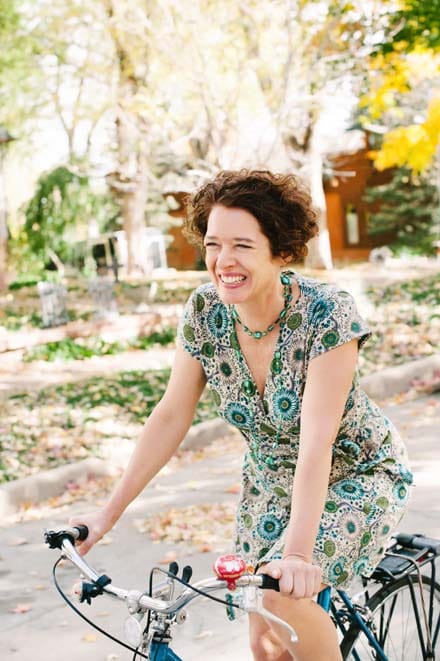
I’m writing this in advance and as an advocate of stepping away from the fray. I do take weekends off and I do get more space in the summer. But a whole week away from all my obligations and routines?

It sounds good and it’s also scary. I noticed all my fears and patterns pop up like popcorn before I left. Would the food be enough for me? Would I get along with the other participants?

This summer I have really noticed how uncomfortable change is. DUH, right? It’s easy to feel the discomfort of where we are. It’s easy to feel desire for where we want to be. But between the two, we encounter a lot of thrash. We don’t easily let go of beliefs, habits, and fears that want to keep us in the known.

I witness my clients as they go through the thrash around writing and creating. Like most things, wouldn’t it be nice if it were just a matter of a slogan – Just do it! Or a schedule we could stick to?

But no. Life is meant to challenge us. If we want to grow, we have to go through the growing pains.

Here’s to giving yourself permission to have growing pains. Here’s to being kind to yourself as you go through the thrash.

What helps you get through the thrash? Feel free to share your thoughts on the Original Impulse blog here.

Filed Under: Creativity

June 29, 2022 by Cynthia Morris 2 Comments

Seasons and the creative life

Summer is my favorite season. It seems the most potent reminder to soak up the moment. If I don’t stop to notice the roses in our yard, next thing you know, they’re faded and falling away.

Summer gets my attention like no other season. Biking around the neighborhood, splashes of color attract my eye. I can’t help but oo and ahh over them just like my mom did when we drove around our town when I was a girl.

It’s easy for time to rush past. I think, what have I done? I see all the things ahead and the projects I want to do.

But when I do a mid-year review, I tap into that slow summer vibe. I pull over and reflect on my efforts. I notice that so far this year, I focused mainly on curriculum development. I love designing experiences for people and this year gave me the chance to develop a bunch of new programs.

My new courses include Your Creative DNA, Paris Sketchbook, Write Your Heart Out in Paris and Write Your Book Coaching Group.

I also pivoted two live courses, The Devoted Writer and Write Your Travel Stories into self-guided programs you can take any time.

We also produced 15 episodes of Stumbling Toward Genius. AND I wrote a draft of my new book.

Time for a break, right!?

I’m supposedly taking my summer ‘break’ but if I’m honest, the only thing I have paused for the season is hosting my coaching groups.

There’s a lot on my plate…I have a handful of new clients I am excited to work with. I’m finalizing the curriculum for my two Paris workshops. I am a juror for a literary grant (more on that in an upcoming issue).

I had grand designs for designing my current book. It’s going to be illustrated! I also considered putting together a book proposal for the book.

What happened to slow, easy summer? Does this happen to you – despite your intentions, life revs and drags you along?

I had to pull the bus over and admit it was time to let some things go.

In my current book, there’s a chapter about how we are affected by the seasons. How each season has its creative vibe. For me, summer is time for my artist to be in the lead. She is painting the summer CSA share and filling a sketchbook of garden delights and more.

Summers are where I replenish, recharge, and get in touch with my wild nature. I need time in the summer where I am not fully booked with work. Summers are for reading more. Summers mean more time outside, away from the screen.

That doesn’t mean no work, just less of it. So, how to lower my expectations and workload? I can defer the book project to this fall. It will be my Atelier project. (Yes, I do a project alongside everyone else!)

Do the seasons affect your creative cycles? Do you dial back the expectations in the summer?

Share your thoughts on this at the Original Impulse Blog here.

Filed Under: Creativity

May 4, 2022 by Cynthia Morris Leave a Comment

Closing the books – a ritual for finishing a notebook

What do you do when you finish a notebook? If you’re like me, you’re so excited to open a new notebook. You might even just stuff the old one on a shelf and move onto those fresh, bright pages, full of potential.

But I’ve found that if I pause and riffle back through the pages, I discover gold in my own notebook.

I recently finished one of my business notebooks. I have dozens of these going back to 2000 when I started coaching.

I took myself to a cafe, got a soothing beverage and with my new notebook, paged through the old one.

I didn’t have a rigorous process. Here’s what I quickly listed:

  • What I had done
    Things to do now or in the near future
    Ideas that still hold interest

Cynthia Morris business notebooksWhen I go through a reflection process like this, I am always surprised. This time I was blown away by how much I did since the notebook began in September. A few things:

  • Revived my podcast Stumbling Toward Genius with guest interviews
  • Adopted a new task planning and management system – Notion
  • Wrote a draft of a new book
  • Designed and launched a new workshop in Paris.

And much, much more. It was surprising because all this happened alongside some very difficult personal experiences.

While it’s not about productivity above all, for me, I often overlook things that deserve a pat on the back. Going through my notebook gave me the chance to see and acknowledge my process, my progress, and my projects.

It’s hard to describe the benefit of this. I can only hope that you would find great value from pawing through your pages as I did.

I invite you to take that date with yourself when you finish a notebook. Go through and honor who you were. Appreciate how you showed up. Love yourself and your process.

What’s your ritual to close a notebook?

Filed Under: Creativity

November 10, 2021 by Cynthia Morris 6 Comments

Why it’s so hard to finish our creative projects

Have you ever wondered why it’s so difficult to finish your creative projects? Why do you have so many great ideas but getting them across the finish line feels beyond your abilities?

Based on seeing hundreds of people through their projects, and my own creative stumbles, I have an idea of why it’s so hard to stay focused to the finish line.

I have a model that I put in my ebook, Cross the Finish Line that can be a way of understanding why we so often stumble before completing projects that matter. We’ll delve into it here. Hopefully, this will help you banish the idea that you are a creative loser.

If you’d like to work with me and others who are headed toward the finish line, join my writers’ coaching group, Write ON. We meet live each week to make real and satisfying progress on our writing projects. Get the details here. 

Also mentioned in this episode, my Paris historical novel Chasing Sylvia Beach.

Here’s a visual of the model:

Finish creative projects model by Cynthia Morris


I’d be so grateful for your help with a review of the podcast Stumbling Toward Genius on iTunes.

Transcript (lightly edited, excuse any wonkiness!)

Welcome to Stumbling Toward Genius. I’m your host, Cynthia Morris. In today’s solo episode, I’m going to share my model for why I think it’s so difficult for us to finish things. If you have struggled with not completing projects that matter to you or even have assumed the identity of somebody who doesn’t finish or a non-finisher, this is the episode for you.

[00:00:35] Have you ever wondered why it’s so difficult to finish your creative projects? Why do you have so many great ideas, but then getting them across the finish line just feels like it’s beyond your abilities. I have a model that I put in my ebook Cross the Finish Line that can be a way of understanding why it’s so difficult and hopefully that understanding will help you feel a little less like a creative loser and B give you insights into making change for the next time.

Before I get into the model of creative blocks, I want to say that I go through these phases in this process with every single thing I make. I haven’t figured it out. I haven’t figured a bypass. I think we all go through this. When I coach my clients. I see them go through this too. So when I see these patterns, it’s the first big step to disrupting them.

Okay, let’s get to the model. First, I want you to imagine a funnel at the top of the funnel. It’s a wide-open field. It’s a big space, and this is where all of our ideas live. This is where anything is possible. It’s so fun and exciting up there. And we love to hang out in this wide-open field of possibilities. We love this part of the creative process because here we are omnipotent, we have all the power in the world because anything is possible.

We can do all of it, we can do everything. And this is where all of our ideas are brilliant. We’re so smart up here. And every idea has this shine and this sparkle. And it’s just like I’m in love with this idea. So this dreaming space has incredible value to us because we love the sense of possibility. We really get a lot of joy and thrill from it.

[00:02:56] We often make the mistake of thinking that is the most we can get out of the creative process. That is the best part, this sense of potential and possibility. So as we move down the funnel, we come to a place where we see, oh, I have to choose an idea to focus on. We want to actually take our ideas out of our heads and put them into form.

[00:03:23] So here it’s still fun because we’re getting into it. We’re having a good time in our creative zone. And if you again imagine a funnel you’re still like in this kind of the cup of the funnel, and there’s still a lot of room and a lot of space. You’re trying things, you’re working it out. You’re coming up with new ways to work with your idea.

Maybe, getting more ideas. We just love this ideation zone, but as we continue on down the funnel, things get more and more difficult as the funnel narrows, we have to shut down our sense of possibility in order to [00:04:00] focus on what is actually in front of us. We start to make decisions here is where the emotional undercurrents that underlie all of our creative processes.

You may start to bump up against existential questions. Like, can I do it? Am I any good? Who will care about this anyway? These are the fears and insecurities that all of us have. This is where it starts to feel so painful because we feel our sense of limitations. And it’s where it’s almost like the sense of possibility flips from everything is possible.

[00:04:41] And it’s all good and shiny and fun. Then it tips to the dark side of possibility. Where, what if it’s really bad? What if people don’t like it? What if I’m just actually terrible? So I think everything has its shadow side and this is where we start confronting the shadow side of possibility. This is when it starts to feel painful and our insecurities sort of take over.

[00:05:09] And this is where we may pop back up to the top where we can frolic in the light and the field of possibility where things feel good. And we love that sense of. But let’s say you stay with it and you keep going further into the project and further down the tunnel. As you’re getting into the narrower part of the cup, you start to come up against even more limitations and constraints.

[00:05:36] Do you have the time to devote to this? Often something strange happens when we commit and we get really into it. Our external world throws us a big challenge. You may have committed to writing a novel and then your computer completely breaks down. You may commit to working with larger pieces and then you have a fire in your studio you’re suddenly becoming a mobile artist, things that you can’t control that make it really easy to give up on what you’re doing.

[00:06:12] Anybody would say, of course, you can’t do that. I call this the test and it happens so frequently and it’s so freaky that I have to think that it’s there to get us to really be clear about how committed are we, what are we willing to do in order to make our thing real and not just an idea? Um, it’s not fun.

[00:06:38] It’s not what we want. It’s not what we’ve ordered up from the universe, but it happens a lot. So if that happens to you, please don’t give up, just use the test as an opportunity to commit evermore de. So another thing that happens when we get further down the funnel is we rub up against our] actual ability to execute on our ideas.

[00:07:04] And this is painful. This is where we have this great idea and we think we can do it. We can write that novel, that’s set in another era. We can write it as a time-travel book. We can write about a real person. Um, this is what I did. I didn’t actually have the ability to do that. My ideas did not meet my skills.

[00:07:29] It took me 12 years and 17 drafts to develop those skills, to meet those ideas. I don’t really even know if I succeeded. I did finish the book. So I feel I’ve succeeded. My novel Chasing Sylvia Beach is no longer an idea. It is a thing out in the world that you can read. But right away, I certainly did not have those skills.

[00:07:53] So 17 drafts may sound painful and definitely at times it was, but the cool thing was that with each subsequent draft, I got so much better as a writer and I could see the changes. I could see the improvement and that is something that I really clung to. And I still cling to whenever I’m iterating on my projects and my ideas that each version is better than the previous version.

[00:08:21] So that really helps me. And maybe that helps you too. This is where in the funnel, as you bump up against your skill limitations, you might look for, what do you love about your medium? What do you love about learning? Finding your humility? It’s great to not know what I’m doing.

[00:08:41] It’s great to get help and learn how to do it better versus thinking that you should just give up or you’re not good enough. You’re getting good enough by doing it. You don’t get good enough by thinking about it or sitting on the sideline. So. Often at this phase when we’re deep in it, another project comes along, maybe it’s an assignment or another idea that pops up that makes you think I should do that thing.

[00:09:10] This happens so much. I’ve done it myself. I see people do it all the time. And my challenge as a coach is to catch somebody before they just bop off to another project. That’s in the easier phase and ask them. You know, some deep questions about committing to the original project and what is their original commitment and what’s important about staying with it.

[00:09:35] so sometimes we will be lured away from the challenges of the current project and we will pop back up to the beginning honeymoon phase of a project because that space just feels good. Okay, but let’s imagine we do stick with it. We really stay with it, despite all of our fears and actual limitations.

[00:09:56] And we get to the last part of the funnel, that narrow tube. I think of this as a kind of creative birth canal. This is the last 10 or 15 or 20% of a project and it is excruciating going down through that tunnel toward the finish line. At least it’s excruciating for me because here you’re in this tube, and you can really only focus on your project.

[00:10:23] You can really only focus on the minute details of the project. You can’t look around and do other things you can’t multitask. All of your energy has to be focused on getting this thing across the finish line and out the tube. And that’s where for me, I get so tired of the project.

[00:10:43] You’re tired of the details. You’re not in love with the idea. You’re in a deep relationship with the reality of the project and the scope of the project and what it demands of you. And often this is the place where we’re bringing something out into the world or publishing a book where need to do all that marketing and pitching and all of the things that we don’t really like doing here, we have to develop a whole new set of skills, including asking for help. And when I think about those last percentages, the last 2%, like the night before launch the night before hitting publish the night before bringing it out there. The demons love to gather around. They’re waiting at the bottom of the tube to catch you and slay you. That’s when you really want to rally your allies and the people around you who believe in you. You definitely don’t do any project alone. You’ll see this in the acknowledgment pages of a book.

[00:11:48] It’s no joke. The acknowledgment pages of a book are incredibly true that you really need a group of people to help you get stuff across the finish line. So what makes it really hard at this last phase is this is where you’re in the final decision-making zone. It’s so hard to complete things because there are a million little, and big decisions you have to make at the end.

[00:12:16] And most of us aren’t really great at making decisions. We have a tough time committing. We second guess ourselves, we fret over quality and we tend to overwork things. We’re seeking to achieve some standard of good that we haven’t even defined. We’re just trying to make it better and better.

[00:12:37] So here in this creativity, birth canal, we face our limits. It gets so challenging in this final phase that we will sometimes opt out and pop back to the realm of possibility where creativity is really just about play and fun. And I understand how we don’t want to face our insecurities and lack of skills. If this is you, you will see that you have a lot of projects in various phases of completion.

[00:13:00] You probably have an identity of being a non-finisher or someone who doesn’t finish things. This may seem benign and depending on your reasons for creating, it may not be a big deal that you never finished. But I have to say that it’s worth getting at least some of our projects across the finish line, even if we don’t publish or share them publicly.And here’s why.

You may have heard me say that what we make makes us, we grow into who we want to be and who we really are when we’re able to honor our original impulse and make the things that we are called to me. Even though we face our demons and challenges while making things, we also gain a lot. We feel good honoring our commitment to our creativity.

[00:13:48] We improve on our skills. We connect with others who are making things, and we can feel an almost ineffable sense of wholeness and satisfaction. Well, before the project is even finished. And when we finish, we get even more for each project that moves across the finish line. We earn a gift. It might be more confidence or a sense of your tenacity or insight about what’s really important for you.

[00:14:20] I believe wholeheartedly that we are rewarded through the process of finishing things and not by accolades or validation from others, but by our own sense of fulfillment. I’m on a mission to help banish the identity of being a non-finisher. If you relate to what I’ve said here, do yourself a favor. Please get more comfortable with the discomforts that are inherent in the creative process.

[00:14:47] You’re not facing these challenges because you’re inept or incapable, but because they are part of the job. Get better at recognizing your demons at getting help and sticking with projects that matter to you deeply. I hope this has helped you if so, make some notes about it.

[00:15:05] If you know somebody who thinks of themselves as a non-finisher, please pass this episode onto them. Again, you can find the visual for this funnel model at this episode’s webpage at. Impulse.com and there you’ll also find a link to my ebook Cross the Finish Line, where you can get more guidance and support for bringing your projects across the finish line.

I’d love to hear your thoughts about this, and whether you’ve seen yourself in the cycle, please leave a comment below and share your experience and thoughts.

Filed Under: Creativity, Podcast

August 21, 2021 by Cynthia Morris Leave a Comment

Where is your big dream?

You don’t need to read this if you are happy with how your dream project is going now. If you fret, avoid, and dread working on the project of your dreams, read on…

What is your big project? This is the thing that doesn’t go away, no matter how many obstacles and fences your inner critic puts up. This is the dream that’s tied directly to your purpose and your sense of mission in life. It could be anything…a book, a body of artwork, a business idea.

When you commit to your big dream project, you feel on purpose and fulfilled. Everything in life is better when you are deeply engaged with your dream project. 

If you’re still sitting on the sidelines of your big dream, what are you waiting for? Permission? More time or money? Maybe you need to be better-looking. (Kinda a joke, but if putting your face out there in videos or public speaking is your project, that is a common avoidance excuse!)

If you are ready to get into a deep and joyful relationship with your project, I have just the thing to get you going on it. My coaching group, the Atelier, is now open for enrollment. For a limited time, you will be able to join a cohort of dedicated creatives led by a seasoned coach and facilitator. This is one of the most fun and effective ways to make the kind of progress you crave.

What if you have a whacky project? No sweat! Any kind of creative project that needs dedication will find a home in the Atelier.* Last year’s members dedicated themselves to:

  • launching a non-profit devoted to new ways of funding communities in need
  • painting a ‘story wall’ that was installed in her local library
  • drafting a book and proposal for a professional project that gathered decades of wisdom
  • writing a memoir that had been haunting her for years.

I will be working on a project alongside Atelier members. I am not ready to reveal it yet but it’s a big dream that has been on a shelf for too long. It feels like there’s no more time to defer our big dreams. Do you sense that too?

Get off the sidelines and into love with your project. All the details about the Atelier can be found here.

*You do need one project to be part of this group. If you have more than one project, you’ll need to choose one. Set up a meeting with me to help you choose which project you want to dedicate yourself to now.

PS>> We only have a few seats left in this year’s Atelier. You can trust that Atelier members are smart, soulful, and generous. This coaching group is unlike anything you’ve ever done before. Atelier members have expressed surprise at how much more they get from this group than they expected. Find out more here.

Filed Under: Creativity

August 18, 2021 by Cynthia Morris Leave a Comment

Self-Knowledge is more important than information when it comes to creativity

On a camping trip this summer, I checked the sky. It’s common for thunderstorms to rain down on a Colorado afternoon. I observed the clouds to whether I should take a hike or take cover.

A childhood memory of learning about clouds floated to mind. I recalled a list of types of clouds. But the only word I could remember now was cumulus. And which were cumulus clouds, the fluffy ones or the skittering, long clouds?

No matter – the names of the clouds were merely information and completely useless to keep me safe. Now I needed knowledge. I needed to read the clouds to take appropriate action. I thought of people who live according to the seasons like indigenous people and farmers who learn how to read the sky, the clouds, the soil, and the air. They don’t just memorize information in a classroom. They gain knowledge and thus wisdom that they can act on.

I’ve been obsessed about this concept of knowledge or information and what this means for us, dedicated to the act of writing and creating. Consider the information you’ve gotten about how to sustain a thriving creative practice. Some concepts include:

  • Write every day.
  • Set a timer – use the Pomodoro Technique!
  • Keep track of your word count.
  • Use social accountability by telling someone you are going to write.

All of those practices can be of use, certainly. But until they are adopted and adapted to your needs and your lifestyle, they are just bits of information. And information without implementation is just…pretty useless.

Unfortunately, these bits of information are not benign. If you haven’t taken these practices on, chances are you’re beating yourself up about it. You’re plagued by not good enough-ness:

Why can’t I just write every day?

Why does the timer just make me freeze up?

Everyone else does it this way.

What’s wrong with me? 

My work as a coach and facilitator is to help you develop your own applied knowledge around what works for you. It’s all just someone else’s good idea until you put it into practice. Suggestions like ‘set a timer’ or ‘free-write your first draft’ either become part of your practice or are set aside. Only through consistent trial and error do you amass the knowledge of your own process. And once you have this knowledge, you continue to build your wisdom and satisfaction around what you create or write.

Gain knowledge you can act on

The barrier between information and knowledge is time. Most of us give up way too soon. We take on information – a creative practice – for a week or two, maybe a month. A week certainly isn’t enough time to gain enough experience in knowing what works. A month, maybe. In my four and five-week-long groups, we definitely get a lot of knowledge about our own style.

But it’s not easy to sustain a practice on knowledge gained in just a few weeks. Think of it – would you marry someone you knew only for a month or two? No, you wouldn’t! Because you wouldn’t have gone through the wringer of life that gives you all kinds of challenges to bear.

Same with a creative practice – committing to one thing for a long period of time gives you the knowledge you need. Over time you learn your:

  • easy excuses – and how to not fall prey to them.
  • true motivation – it’s rarely what’s on the surface.
  • reentry strategies – what works for you to get back on track when you fall off.
  • joy – making things isn’t all painful drudgery; we make things because of the love and joy we feel for our ideas and art forms.

This is all the stuff we work on in my coaching group, the Atelier. It’s eight months long for a reason. Developing as a writer or artist goes beyond the surface of information and ideas to real wisdom and knowledge about what works for you to succeed creatively. Members thrive in this environment because they realize that making things isn’t a quick, surfacy kind of thing.

What’s your experience with information versus knowledge when it comes to your creativity? Share your thoughts below.

And if you have a project that you are ready to earn knowledge around, check out the Atelier. We have a few spots left for smart, soulful people ready to dig in and learn about themselves in relationship with a project.

Filed Under: Creativity

August 13, 2021 by Cynthia Morris Leave a Comment

The joy of being dedicated to something scary

If you’ve heard me talk about my group coaching program, The Original Impulse Atelier, you might have questions.

The Atelier could be great for you if you:

  • have a project you yearn to focus on – even finish!
  • can’t seem to make the time/space for it on your own
  • enjoy being part of a community of creatives dedicated to their projects
  • are ready, willing, and able to finally fall in love with your project.

writing promptsIf you’re like me, you feel a wave of excitement accompanied by fear at the thought of committing to your project. It makes sense – when we step up to do our creative work, we decide that our passion is more powerful than our fears and excuses. We decide YES! Now is the time to heed the call and commit to this thing that won’t leave us alone.

I’ll be working on my own project. Atelier members love how I am in it with them. I never come from a pedestal, expert mode, or teacher above anyone else. The way I see it, we are in the same river of creative adventure. I may be just a few paddle strokes ahead. I’ve spent years refining what works for me. Sure, I get stuck…but it takes less time for me to recover.

I also know that the feelings of joy and personal empowerment on the other side of the fears are worth all the angst. I love knowing that I can trust myself to follow through on projects that matter to me. I want this for you and everyone who wants to make things.

Atelier members love being in deep relationship with their project. If you are part of this group. finally, there will be no more guilt or avoidance. Just the pleasure of knowing you are honoring your creative impulse in a fun and effective way.

All the info is available here; just download the program guide for details.

Filed Under: Creativity

August 3, 2021 by Cynthia Morris 2 Comments

Bad news: You’re not ‘good enough’

I’ve noticed that many of us suffer from the ‘not good enough’ illusion when it comes to our writing, creativity, and heck, life in general. We’re all trying to prove something to someone that we are worthy. Is this true for you? If so, read on.

It’s absolutely valid that there are standards of excellence that must be met in life. Applying for school, becoming a doctor or engineer or architect, yes, you have to exhibit a certain level of skill there. There’s a clear bar and yes, you have to rise to it.

But with writing and art – what’s the exact metric for ‘good’? When we are writing, we may feel in the flow. But soon enough doubt creeps in and tells us crappy things like ‘this sucks. Who would care about this?’

The reason you are not ‘good enough’ is not because you are untalented or unskilled. It’s because you haven’t taken the time to define ‘good’ for yourself. ‘Good’ is an ambiguous target that you’ll never reach because it’s not about a level of craft. Instead, it’s about your ego’s demands to be liked, accepted, and validated.

If you’ve ever won a prize or gotten kudos for your work, and felt great for a moment, then that was followed quickly by your inner critic pointing out how that feedback doesn’t validate you, you will know what I am talking about. No matter how ‘good’ you are or successful, that voice will jump in to trample your creative gains in the mud.

Imagine me saying these things to you after a creative win:

Yes, you got that newsletter out but it wasn’t as good as you’d like it to be.

Sure you wrote for an hour, but you didn’t get as much drafted as you hoped for.

Yea, you got into that art show but you didn’t get any feedback or sales.

That’s great that you painted today but the work isn’t really what you want it to be.

These are the things you say to yourself because you never let your efforts be good enough. If you heard those things from me as your coach, you’d fire me! Or maybe you’d keep me on board because I collude with your inner critic and the part of you that can’t let yourself have even a teeny weeny gain.

Another challenge is that when we are working on something, we simply don’t have what I call critical distance. We are not able to judge in the moment whether something is good enough. Your inner critic takes over the mic and you come to believe that’s the whole story.

These are the voices in my clients’ heads that I am honored to listen in on every day. I don’t collude with their inner critic. Instead, I invite new perspectives so the creative process feels empowering and enjoyable. 

What do we do with this persistent need to prove we are ‘good enough’? If you’re in the phase of the process that’s not reliant on other’s responses such as submitting your book for publication or your art for review, there are ways you can work with this issue. Here’s what I suggest if you suffer from the ever-moving target of good enough.

First, define your ‘good’. Identify where you are in the process. Are you hacking away at the first draft? ‘Good’ might be just getting ink on the page. Later drafts might need a different metric. Focus on the craft of writing.

What makes for compelling passages? Engaging sentences, authentic voice, and dramatic tension are a few elements of craft you could measure. Does the writing flow? Is it moving me as I write it? As the writer, am I engaged on a deep, emotional, visceral level or am I skating on the surface with clever phrasing?

Ask yourself: What constitutes ‘good’ for the piece you are working on? And don’t let the inner critic aka perfectionist demand too much in the early stages. A piece needing to be excellent right away is like expecting your toddler’s first steps to be elegant and swift. Our first and even second or third attempts are full of stumbles and places to learn. You’re growing.

Another way to get past ‘good’ is to savor the process rather than the outcome. Most creative projects are a long game and take years to complete. If you are constantly operating on a tank of ‘not good enough’, you won’t have enough fuel to make it to the finish line.

How does it feel to show up for your project? What benefits or changes do you notice in yourself when you dedicate yourself on the regular to your creative work? In my workshops, I invite people to do a simple but powerful reflection process. Ask yourself: how was that for me? Then jot down three words at the end of a session. Keep a list of your reflections. Over time you will have a true picture of the real value to you of doing your creative work. This can replace an ambiguous goodness that you’ll never attain. You can finally feel some satisfaction in the process.

Make ‘good enough’ an inside job. You’ve done well when you show up consistently. You’re good enough when you put in the hours. You’re good when you let yourself ‘go there’ to be honest in your work. You’re ‘good’ when you show willingness to be humble and learn. You are enlivened because you are honoring your values at a deep level when you show up for the work, even when the outside world doesn’t see or validate your efforts.

Do you suffer from never feeling ‘good enough’? Share below what has helped you overcome this insidious creative challenge.

Filed Under: Creativity

July 21, 2021 by Cynthia Morris Leave a Comment

Why you’re not getting your important creative work done

Do you have items on your to-do list that never seem to get done? They either get pushed to the next week or fall off your radar. Even must-dos get ignored or ditched. But the tasks we avoid don’t just disappear. They haunt us. They live in the dark valley of our unlived potential. Deflected work becomes proof for our inner critic that we can’t finish things and that we don’t have what it takes to succeed. Continuing to defer the difficult stuff isn’t as benign as we may think.

This happens to me. There are plenty of things looming on my to-do list week after week. Finally, one day, I understood why. This may sound obvious to you, and it is, but how we deal with it may not be apparent. Ready for the big aha?

Some of the tasks on our lists are more emotionally difficult than others. 

Pause now and scan your to-do list. Do you feel an emotional charge when you see some of them?

This may seem obvious now, and perhaps when you write the tasks down, you feel a twist in your belly or your jaw clenches. Anxiety creeps into your planning process, but you override it. When we are planning, the actions we need to take are still in the distance. The fears they may evoke aren’t threatening until we step up to do the work.

The items that get ignored, avoided, or deferred to the next week are likely the tough stuff that pushes you out of your comfort zone. Maybe it feels hard because you have to ask for help. Or, you simply don’t have yet have the skills or tools to do it.

Not surprisingly, the difficult items are often the things that drive my inner satisfaction and my outer success. When I do the hard things, I grow personally and professionally. 

I found a simple solution that honors the challenging nature of some of the tasks. It allows me to get things done – even the scary stuff.

Here’s what I do. I color-code my tasks.  When I started color-coding my list, it because crystal-clear which types of tasks are emotionally charged. I can easily see when I have heaped too many hard things on the week. I can plan for how and when to do the daunting tasks. Here’s my system:

Green – easy peasy. I default to these behind-the-scenes tasks 
Blue – challenging, but with focus and planning, I can do it 
Red – super tough, accountability and deadlines are likely needed 

Easy stuff for me includes writing, curriculum development, easy admin stuff, planning, ideation. The challenging tasks almost always include outreach and follow-up, including asking for help.

Take a look at your task list using my color-coding method. Instead of colors, you might use emojis or symbols for how ‘hot’ the tasks are. I like the idea of flames – three flames mean it’s a hot one! Two flames, not so unbearable. One flame, easy to do.

In most of the productivity advice I see, there’s little that respects the emotional nature of the work at hand. Use a deadline, set a timer, get external accountability. All of those hacks are great. But there’s not a lot that helps us understand why things are emotionally daunting.

Acknowledging our challenges gives us the chance to overcome them. Bullying ourselves to ‘get it done!’ or ignoring the hard stuff leads to failure and disappointment. This inner work is my favorite part of being a coach. Anyone can follow guidance about how to use the Pomodoro method. But unless you’re aware of and working with the undercurrents of your project, you’re not going to get the job done solely with a timer.

In my coaching group, the Atelier, we take the time to understand the factors at play in our productivity. Members of the Atelier get training in what works for them to get their best creative work done. At the end of the program, they know themselves and their process. Atelier members no longer get stuck when things feel hard. 

We’re currently enrolling for the fall 2021 session. If a curated group of dedicated creatives feels like the right thing for you to get to that project of yours finally, check out the Atelier here.

Filed Under: Creativity

July 7, 2021 by Cynthia Morris Leave a Comment

Ditch the efficiency imperative

Do you take some downtime in summer to enjoy the season? Longer days, flowers aplenty, and gardening give me the incentive to step away from the computer and get outdoors. I generally work in the first part of the day and spend later afternoons doing other things.

Recently, I’ve visited the Denver Art Museum and Botanic Gardens. I’ve enjoyed writing dates and friend visits and poking around in the garden. I’ve put summer hours into effect for years now, and I see the positive impact it has on my work. It feels great to give my brain a break from work mode. And when I do get back to the desk, I feel focused and energized. I learned long ago that a certain amount of time off, even in the middle of the day, serves me more than pushing through and bullying myself to be productive.

Check out these gorgeous hollyhocks in the park near my home studio!

Why do I tell you all this?

In the thousands of conversations I have had with creatives, I’ve seen that space is vital to the creative process. When we exit ‘doing mode’, we access new ways of thinking, feeling and being. In the ‘empty’ spaces, new connections form. Solutions to problems in work and life pop to mind. These new connections are vital to our making.

Yet, it is hard to unplug from the efficiency imperative that is engrained in us. Time and again, my clients struggle with the messy, meandering path that our projects require. We’ve been trained to think ‘doing’ is the only valid mode. Every single minute doesn’t need to be optimized and productive. It’s as if creativity snubs its nose at efficiency and ‘making the most of our time’. And yet, every minute of our lives can be valuable to our projects, but that doesn’t mean we have to be constantly ‘doing’ or ‘on’.

When strolling around the pond a few weeks ago, I got a huge download of ideas for an art project I am working on. I grabbed my notebook and wrote it all down. This would not have come to me if I had been trying to find it or constantly staying in busy mode. I also had my notebook nearby to capture the ideas after the walk.

When we give ourselves space, we are able to rest and replenish. I created a ton of things last year, from my Patreon to Write Your Travel Stories to a series of low-cost workshops for creatives and more. I needed some time to rest and replenish. Stepping away from projects gave me space to be just a person and not a worker bee. I find myself sleeping longer and taking more frequent breaks. (I think I need this also now because there’s been a lot more socializing this month!)

The only way this works is because I trust myself and my work process. Anyone who knows me sees how wildly productive I am. For me, time off fuels more creativity and productivity. I train my clients to learn to trust themselves and their work style so they can enjoy free time if they wish.

Stefan Sagmeister encouraged this in me in his TED talk, The Power of Time Off. He shares how he overcame fear of time off on his sabbatical.

It’s okay to be efficient. It’s necessary! But not all the time. I hope you give yourself the space you need to be your most creative, vibrant self.

This is just one of the counter-intuitive pieces I work with in the creative process. In my coaching groups and workshops, these are the vital practices we put into place around our projects. My coaching is high-level training in learning to trust yourself and your intuition. It’s not always easy to step out of the mainstream assumptions and habits. But it always pays off for our creative work.

Have you had more space for yourself to roam, rest, and replenish this summer? Let us know how it’s impacted your creativity here.

Filed Under: Creativity

  • « Go to Previous Page
  • Page 1
  • Page 2
  • Page 3
  • Page 4
  • Interim pages omitted …
  • Page 21
  • Go to Next Page »

Primary Sidebar

An Illustrated Feast

An Illustrated Feast watercolor workshop Paris Cynthia Morris
Cynthia Morris novel Her Lisbon Colors

Creative Success Stories

"Being coached by Cynthia highlighted my unrevealed gifts. Our time together has revolutionized the way I work and lead my companies.

Her wisdom about creativity and productivity has added value to every area of my life from personal health to creativity and generating wealth.

I would have never imagined that this powerhouse of a creative would help me grow, connect to my heart and improve my companies in so many areas. Cynthia’s coaching is like supercharging a normal engine; there is no comparison."

John Marsh
Founder, Marsh Collective

"For years, I struggled with this belief that I wasn't good enough, that I wasn't a real writer, that I wouldn't be able to follow through. Your coaching and support opened something in me that had gone dormant.

With your words in my ears and my heart finding new excitement, I pushed the words across the page. My first novel is complete. You, dear Cynthia, helped me lay the dominoes. I can’t thank you enough for the motivation, the inspiration, and the reminder that I was meant to write."

Tabetha Hedrick
Author

"Cynthia has given me my writing voice. I can now say I am a writer. My newsletter readers tell me how much they love receiving it!

Cynthia has a great spark of life that just shines out. She engages in a way that encourages you to challenge yourself as a writer and is there to help pull you out if you get stuck or lost."

Ruth Dent
Artist

"Cynthia helped me drive a short story across the finish line. I recommend Cynthia if you want to learn about your own writing process in an experiential way and get practice on things like letting go of perfectionism for a greater goal."

Roseanne
Writer

"Cynthia helped me so much to develop a writing practice. I love her approach to combining creativity and action. It's gentle and effective and highly self compassionate."

Laila Atalah
Writer

"Because of my work with Cynthia, I have been able to embrace my artist's path and choose a lifestyle that truly speaks to my soul. Instead of trying to be and do everything, I now follow my true desires with courage, joy and serenity.

Cynthia is intuitive, down-to-earth, straightforward and honest. She can read between the lines, and she never lets me run away, give in and give up. Cynthia is a fabulous mentor and an amazing artist."

Maya Sofia Preston
Photographer

Let’s Connect

  • Email
  • Instagram
  • LinkedIn
  • YouTube
Finally be the creator you came here to be
  • This field is for validation purposes and should be left unchanged.

Copyright © 2026 Original Impulse. All Rights Reserved. Privacy Policies.