• Skip to main content
  • Skip to primary sidebar

Original Impulse HomepageOriginal Impulse

  • Work with me
    • Quantum Energy Clearing
    • Write ON
    • Writer’s Coaching
    • Paris Sketchbook
  • About
    • About Cynthia
    • Successful Clients
    • Media
    • Speaking
  • Books
    • The Busy Woman’s Guide to Writing a Book
    • Her Lisbon Colors
    • Client Books
    • Books for Creatives
    • Book Recommendations
  • Contact

Cynthia Morris

August 4, 2025 by Cynthia Morris Leave a Comment

AI Will Never Be Able to Replace This

I’ve been paying attention to AI and using it to help with my business strategies and planning. While I still have misgivings, I feel I need to understand this technology and the role it plays now and in the future.

For those of us who LOVE ideas, AI is a no-holds-barred spree of possibility. The plans! The ideas! It’s all so…vomitously overwhelming.

For someone who loves ideas and loves executing on them, more ideas are not valuable to me. It gets vomitous when I am hosed with so many possibilities that I am paralyzed. I have pages and pages of ideas for promoting Her Lisbon Colors. So many that they are rendered useless. I’m left not with a great plan but with more confusion than when I started. We don’t need AI to trigger indecision swirl, do we?

If you like floating endlessly in idea land, great. Enjoy that! If you want the deep satisfaction of bringing ideas to life, read on.

Using AI for project vetting and development

I recently used ChatGPT to bounce my idea of a limited series Stumbling Toward Genius podcast based on the themes of my novel. Chat was super helpful for:

  • Discerning whether this was a good idea or not given my goals. (I always tell it to not fluff me up or flatter me but give me real data.)
  • I gave it the topics I had and asked what be interesting to my listeners.
  • I asked what was missing or needed strengthening. This prompt gave me the most helpful input. It offered new perspectives and challenged me.
  • Deciding to go ahead with a limited series of short episodes, I generated a table of contents for my podcast based on my existing topics.
  • Chat also gave me ideas for how to post the podcasts on YouTube as well.

I’ve got scripts that I drafted as social media posts, I have a plan and I have all the ideas for how to implement.

What’s missing? I’ll wait while you guess…

That’s right! Actually taking action on these genius ideas and plans. How’s that going to happen?

I can do what I usually do – set a deadline. These are often based around travel. I leave for Lisbon and Paris on September 25th, so ideally all episodes would be done and published/scheduled.

As a seasoned coach and maker of things and experiences, I know I can do this. But what about other projects that have a higher emotional burn? The stuff that I’m scared to do? For that, I need support. Someone to help make me do what I say I want to do. And I suspect you need that kind of support, too.

Here’s where AI completely fails

I’ve coached hundreds of creatives over 25 years, and almost every single client has cited accountability as the main reason they hire me. Sure, they need a thought partner, a hand-holder, an emotional support person. All of that is valuable. And, super important is someone there on a regular basis to make sure they actually do what they say they will do.

There is nothing wrong with needing this. We all need accountability. We are human, complex, messy, distractible, and emotional. 

There will always be the weeks when the shit hits the fan. Contrary to what we’d like to believe, there is no ‘normal’ week. Always, always, always there will be something planned or unplanned that disrupts our ‘write every day from 8-10’ schedule. What happens then? More ideas from AI will not save your bacon.

This is where my clients thrive with me. I am always helping my writers and artists:

  • adjust expectations
  • process disappointment
  • reset according to current conditions
  • make satisfying progress on their terms.

No AI can do that in any meaningful way.

AI Cannot Replace This

AI will never be able to replicate what happens in a 1:1 or group coaching environment. Group coaching has the power of the collective. I’ve been leading versions of my popular Write ON for a decade now, and I am 100% certain that the magic and connection that happens there is not in AI’s skill set.

Many of us join groups not for the leader, but for the companions who will travel alongside us. We gain so much from others’ experiences.

Working alongside others helps us:

  • normalize the ups and downs of the creative life
  • learn from how others do it – a springboard to reflect on our own processes
  • gather valuable resources we would not have found otherwise
  • and quite simply but quite powerful – have more fun.

In Write ON, we work in weekly sprints. We focus on gathering insights on how we best navigate the ebb and flow of our creative lives. I coach us through it, week by week. And, I paddle alongside with my own project, sharing the challenges and wins in real time.

And guess what happens at the end of our Write ON cycle? A ton of progress, that’s for sure. Here’s something AI will never deliver to you: 

  • confidence in your abilities
  • satisfaction that comes from doing the work
  • personal and creative empowerment that you’ve cultivated by showing up
  • earned experience and wisdom that you can apply to anything you create in the future.

I’m not worried that AI will replace me and my coaching. Sure, you can ask AI for ideas and even a detailed plan. But someone alongside you helping you grow and glow as you make your beautiful things, that’s for us humans.

Enrollment is open for Write ON, which starts later this month. We have a few spots left – I cap enrollment so there’s no chance to hide in a sea of participants.

This is a 16-week adventure for those with a project they need a container for. It’s a small group, so there’s no back row to hide in, no ‘falling behind’ and no wasting your money on another program that gets you nowhere.

It’s fun, effective and just the right amount of demanding. Get all the details here.

P.S. This article was entirely written by me, Cynthia Morris. AI helped slightly with Grammarly, but mostly I ignore those suggestions.

P.P.S. Please do not use AI to outsource your writing! Guess what? It shows! I can tell when someone’s social media posts are written by AI. AI is great for marketing, interpreting legal documents and wasting a lot of your time sucked into screen mode.

Filed Under: Creativity, The Writing Life

July 15, 2025 by Cynthia Morris Leave a Comment

The Author Care Kit I Wish I’d Given Myself

What a month! I almost feel like a different person. After launching the novel, I slid into what authors know is the inevitable letdown. It makes sense – for 2.5 years, I have had quite a force of momentum. Writing, editing, and publishing Her Lisbon Colors consumed the bulk of my creative energy. It also gave me a lot to focus on and quite a bit of meaning.

Cover for Her Lisbon Colors novel Cynthia Morris fiction book I’ve moved out of my funk and have shifted to promoting the book. It would be easy to move on! People ask, “What’s next now that the novel is out?” Making sure it has a life! It truly is like a baby that needs a lot of nourishment to stay alive. I’m committed to a year of putting the word out there.

This requires a lot of bandwidth, courage and focus. For all the hard work of writing and turning a manuscript into a book, the work of promoting is much harder. I am sharing about this through December at Stumbling Toward Genius. Are you subscribed?

My author self-care kit for publishing a novel

Oh I wish I had an ‘author care kit’ of sorts! In retrospect, I know what I needed, and I will share it here. This is for the sake of helping me debrief and sharing with you in case my bloops are of service to your own projects.

1. Take a break with rejuvenating treats. It really felt like I was zoomig on a highway for months and months and then exited. But I still had the feeling of movement, like I needed to keep working toward the launch deadline. I went away with Steve for a hot springs weekend and it was bliss to be offline and soaking in the water.

2. Lower expectations I have informally renamed myself the ‘lower the bar coach’. I know that our high expectations do nothing but turn around and bite us hard.

I don’t know what I thought – that I would get rave reviews right away? All I know is it felt very quiet for the weeks after the launch. A lot of friends said “I’m reading your book and loving it!” and then weeeeeeeeeks passed and I didn’t hear anything.

My inner critic had all kinds of stories about this, mainly that they didn’t like the book and didn’t know what to say. (Tip for friends of authors – say nothing until you’ve finished reading!)

3. Stay connected to the original impulse. Why MUST I put this book into the world? When we put stuff out there, we are now connecting our ideas and values and creative soul with the world. This is the cool thing about art – once it’s out there, it has a life of its own.

Staying connected with my WHY helps me know that the book is important to me, no matter how it is received by the world. I loved writing this book, I loved how it turned out, and my job is to keep loving it.

4. Have therapeutic supports in place. If you know me, you know that the reason I help creative people bring their bright ideas to life isn’t just for the sake of getting stuff done.

I believe in stretching and growing as humans. I love coaching people through the fears and insecurities we all face. I was so focused on all the details of making and launching a book, I didn’t take time to tend my emotional self. Luckily I have therapeutic support in place now and am feeling much more grounded and sane.

5. Forgive yourself for not doing everything, and for not doing everything RIGHT. My goodness, there are a million things involved in getting a book out there! We’re advised to stay focused on a few avenues of promotion, but it’s hard! I have made so many mistakes and I often still feel ‘all over the place’.

6. Make a plan for ongoing promo. I was sitting poolside on a Friday afternoon when clarity around how to stay on track with my novel promo came to me. I felt that recognizable spark of enthusiasm light in me. I made notes and now am on week two of 100 days of Book Promo.

With a million things to do, coupled with the emotional labor of that work, it’s easy to lose steam and do nothing. Having structure is vital for me, and I suspect for you, too. (This is why I love Write ON so much! Structure + camaraderie hosted by a certified coach = much more writing joy.)

What surprised you from this list? What would you add to your own author care kit? Tell us below.

Filed Under: Books for Creatives, The Writing Life

June 3, 2025 by Cynthia Morris 16 Comments

Why the stories you write are boring

I was in Lisbon when the total blackout hit the Iberian Pennisula, removing power from all of Spain and Portugal for the better part of a hot April day. This was interesting! Nothing like this had ever happened to me. Of course I would write about it.

I made notes that day and night to capture the sensual experiences of being without phone or light or access to my rented apartment. I wrote a draft of the story back in Denver.

But then I blundered into territory my clients and I always stumble into. I was three pages into telling the details of the blackout – trams stalled in the streets, all shops dark and locked, no cell phone access at all. Three pages in and still was not even close to getting to why this mattered.

What went wrong? We all think our stories are good – and they are! These tales are interesting to us, but are likely only mildly interesting to a reader. I’ve identified the problem. It’s a case of anecdote versus story. Here’s an example.

Anecdote versus story or boring versus life-changing

Anecdote: On the way here, I saw a performing monkey! It grabbed my beret and put it on and played the accordion! It was so funny!

Story: On the way here, a performing monkey grabbed my beret and played a song on the accordion. The song was the one I always have in my head when I think of my French life. All this time I had been in love with France, thinking the song and the beret made me more French. But my facade was easily taken on by a street monkey. I had never felt so cheap and superficial in my life. Now I question the things I love – am I such a cliche? Or was the song a sign? Did my beret hold the song about Paris but also all my hopes and dreams?

Do you see the difference? A story has a deeper meaning, something more important to the narrator than ‘isn’t that funny?’

We tell anecdotes to fill time and space and share an experience we had. We write stories to understand something on a deeper level and to convey some meaning to the reader. As writers, we have to work to excavate the meaning.

The blackout story was just an anecdote. Until I dug deeper for a reason to tell this story, it wasn’t worth continuing. I was bored adding up all the ‘and then this happened’. (If you get bored writing, chances are your reader will be bored reading.) I didn’t have the bandwidth to really delve in to discover what matters, why it matters to me, and how it might matter to you, the reader.

People telling anecdotes mostly just want someone to hear their story. People writing stories want to move the reader with a new insight, feeling, or idea. They want to be moved themselves.

If you are stuck in anecdote territory, wondering if it’s interesting to a reader, dig deeper.

Three ways to make sure your stories aren’t boring

Check into your values. What is meaningful for you in this story? I couldn’t find many of my values honored in the blackout story. But the piece about speaking Portuguese while in Lisbon? I had at least 8 values in that story. Writing it felt alive and meaningful.

WAIT. After you’ve pecked at the story a bit, take a break. Ask yourself Why Am I Telling this story? Why does it matter to you?

Who cares? When we get stuck, we often think, who will find this interesting? Who cares? If you know who you are writing for – and you should – it will be easier to know if your reader will care and if so, what they will get from this.

What do you want for the reader? Why MUST they read this story?

When drafting my novel, I had to cut many major chapters. Whole sections! I loved these scenes. But they were merely interesting, not essential to the novel. Editing skills are as important as drafting skills.

Get your copy of Her Lisbon Colors here. 

I hope this has helped you to improve your storytelling skills. Please let me know what this illuminated for you in a comment below.

Filed Under: The Writing Life

May 19, 2025 by Cynthia Morris Leave a Comment

Paris Sketchbook Art Workshop

https://www.originalimpulse.com/wp-content/uploads/2025/05/Paris-Sketchbook-October-7-12-2025.mp4

Filed Under: Creativity, Video

May 10, 2025 by Cynthia Morris Leave a Comment

What a Book Coach Does: Developmental Editing and More

This year marks my twenty-sixth year as a coach. I knew when I came upon coaching that this would be my lifelong career. It's an honor and pleasure to serve the smart, soulful people I call my clients.

This week, I want to share a peek behind the scenes of my work with clients. Once, my dad, with a puzzled look, asked me, “What do you do?”

I get it. As a coach, a lot of my work is not visible. Recently, I shared about my client Donna Erickson’s newly published book. Not every day is a pub day, and the labor of our creative efforts make up the moments of our days. I believe they deserve attention.

You may wonder what Cynthia does with her clients and how she might help me.  I want to share what my other clients are up to and how I am helping them.

Come into my coaching studio to see the magic that happens!

Synthesizing a message for a keynote

Since her book launch two years ago, Paula has been busy speaking and publishing her new newsletter. Recently, she was in Mexico City to give a keynote and an all-attended workshop at a Montessori conference.

She worked hard to get her talk right but was still frustrated. She had too much in there! (Sound familiar?)

After hearing her out and acknowledging her frustration, I helped her shift her thinking about what to include so it would be easier to trim the presentation.

After we did this, I restated how we’d made this shift so she now has those skills to edit anything she writes more easily.

Making the most of an in-person event

Paula had a blast, and we debriefed afterward. Hearing her stories was so inspiring. I pointed out that she had at least six pieces she could write as a short series about the Mexican Montessori community and what she took away from the conference.

I am always on the lookout for ideas that my clients may miss. Highlighting what is of interest to others is one of my gifts.

Developmental editing for novels, non-fiction books and memoirs

Several other clients are writing their books. My role is to help them shape their ideas into a cohesive message. We talk about organizing their ideas. No matter how smart and articulate we are, it’s super hard for us to get to the essence of an idea and communicate it succinctly. Even for clients writing a book based on a model they’ve worked with for years, it can be hard to shape that into a book.

This work is called Developmental Editing.

I well know the challenge of this work, both mentally and emotionally. Then there's the work of organizing our materials. Documents, spreadsheets, outlines, drafts...this really is at least half of the work of making a book.

Crafting a compelling message for a book proposal

I’m helping another client with his book proposal. This is similar to developmental editing, and it’s also about thinking about how our books will sell. It’s incredibly hard work to shift from author to seller of your idea.

I hold space for the thrash that we all endure when we are trying to crystallize our ideas into something compelling and saleable. I'll often feel bad that it's so hard for them. I have to be tough. Sometimes I think - am I too tough? Then I realize it's not me that is being hard on them. The work is hard. I hold my clients to a high standard that equals their dreams and goals. I would expect the same from my coach.

 A book coach is more than an editor

Speaking of emotions, a lot of my work with clients is helping them navigate all the emotional churn that accompanies our creative work. You know what I mean, TET. The doubt, the insecurities, the overwhelm and confusion…that stuff is real. The emotional churn is the real thing that keeps us on the sidelines of our creative dreams.

Everyone, no matter how smart and accomplished, feels the full range of creative ‘crazy’. 

As a trained and certified coach, I have skills to help people navigate the ever-shifting terrain of their inner lives. Beliefs, feelings, and thoughts can work in our favor when we are aware of them and make choices.

As someone who has created and launched books, programs and creativity workshops in Europe, I know full well this rainbow of emotions. I bring empathy and, when useful, brief stories from my own creative work to help normalize the challenges.

Thank goodness I discovered coaching all those years ago in a magazine article. Thank goodness I trusted my instincts to follow this path. I continue with ongoing training and development, and I continue to love this work that brings so many of my skills and gifts to bear.

Do you have a project you could use an ally on? I’d love to help. I am accepting new clients this month. If you want to get me on your team, book a discovery session now to see how I can help you bring your ideas to life.

Get a sense of how I work with my book, The Busy Woman's Guide to Writing a World-Changing Book.

Filed Under: Books for Creatives, The Writing Life

May 8, 2025 by Cynthia Morris Leave a Comment

Celebrating a new book by Donna Erickson

I celebrate my client Donna Erickson’s book, Rooted at the Edge: Ranching Where the Old West and New West Collide. (University of Nebraska Press/Bison Books, 2025).

Donna Erickson book This is a great book that speaks to one of the biggest issues the US faces now – the conflicting interests that have sprung up in different communities. Think farmland that has been repurposed for big box plexes.

Donna’s family story and her professional background come together for a compelling and informative read about how land use and communities are changing in Montana. 

It was a true honor to be part of this project. Donna wanted a book deal, so she hired me to help her write her book proposal. 

I knew when I read a sample chapter that this book would be a big hit. And yet, the work of writing a winning book proposal is not for the faint of heart. I call it a ‘stand and deliver’ moment. It’s a TON of work, and is very emotional. 

Luckily, Donna was up to the labor. She finished her proposal in four months. We had discerned that a university press was the best choice for this book. Within hours of submitting it to the University of Nebraska Press, they called her. Shortly after, she had a book deal.

This was a glorious moment, and today, holding the book in my hands, filled with her wonderful writing and her photographs and illustrations, I am thrilled for Donna. 

Donna’s writing is personal and professional, heartfelt and super-smart. Get your copy of Rooted at the Edge now. 

Bring yourself closer to creative success with me

My coaching calendar is open for new clients starting in May. Make real progress on your book or other creative project by booking a discovery session now. 

Filed Under: Books for Creatives, The Writing Life

January 27, 2025 by Cynthia Morris Leave a Comment

Summoning the courage to write a book

It was such a pleasure to talk with James Navé on Twice 5 Miles Radio.

James is a poet and teacher and co-leader of Imaginative Storm. Along with Allegra Huston, James leads workshops and twice-weekly online Imaginative Storm sessions.

Check out the episode and others here. 

Filed Under: Podcast

December 17, 2024 by Cynthia Morris Leave a Comment

Left and Right Brain Coaching Skills Save My Clients Time and Angst

Clients come to me because they want to write a book or articles for their work. They’re smart, soulful, and bursting with inspiration. They have lots of ideas and papers everywhere. They are ready to put their ideas into shape, but they don’t know how to get organized and get started. I get it!

There are two major aspects of writing that I help people with, and they may surprise you.

Left-brain systems understanding

Ironically, one of the main skills I bring to my coaching clients is structure. It turns out that my genius zone is helping people organize all those ideas and papers into smart, soulful books that make a difference in the world. Clients often say I have a laser-sharp focus and ‘hit the nail on the head’. I see what they don’t. This comes out when we’re brainstorming and I’m helping a client synthesize their many ideas into a coherent whole.

It’s so fun to help them bring their ideas into shape. The clarity they get allows them to get their ideas down much more quickly. But that’s only half of the work.

Right-brain empathy

If writing were merely a matter of organizing our ideas and materials, it would be much easier. But writing is one of the most vulnerable and scary things we can do. We’re called to be honest, to be generous, and to bring language to what we care deeply about.

Three main monsters stand at the gate, preventing us from entering our genius zone of writing:

  • fear of not having something to say
  • fear of merely repeating what is already out there and
  • fear of not being a good enough writer.

Writing a book takes time because we need to deal with these so they don’t keep harassing us and making writing a misery. No one is immune to insecurity about writing – not even my smart, accomplished, and soulful clients.

Coaching skills are real

My coach training taught me how to serve my clients by actively listening, staying out of my own story, and moving them inward to understanding and outward to action on their goals. I cannot emphasize enough that the training I started in 1999 and continue to this day is why I can succeed with my projects and help my clients succeed with theirs.

In all my work, I use my left and right brain capabilities. Designing and leading retreats, writing books, and coaching others to realize their creative dreams bring all of me to the table. I LOVE that. Empathy, organization, and seeing both the big picture and the details are the skills that make writing a book—or anything—possible.

What monsters linger at the gate to your writing joy? Share them in a comment below. 

I’ve shared a lot more about how to get organized here. 

Filed Under: The Writing Life

December 17, 2024 by Cynthia Morris Leave a Comment

Know your creative truth at midlife: podcast with Kimberly Wilson

What fun to be on Kimberly Wilson’s podcast Tranquility du Jour. The current season of the podcast focuses on midlife, reinvention at midlife and how creativity plays a role in our well-being.

Among other things, we discussed balancing writing, art, and business by embracing seasonal shifts in focus.

I have the great good fortune to know Kimberly and to spend time with her in Paris, and this conversation was a delight. Enjoy!

Kimberly Wilson podcast Tranquility du Jour with guest Cynthia Morris. Women at midlife, reinvention creativity and well-being.

Filed Under: Podcast

October 21, 2024 by Cynthia Morris Leave a Comment

Sketchbook Tour of Cynthia’s Lisbon Wow

I filled this custom-designed accordion notebook in a week, using our fun, easy and quick sketchbook practices. Writing, drawing, filling pages with the delight that is Lisbon.

Three spots left in our April, 2025 Capture the Lisbon Wow! Reserve your spot here!

Filed Under: Creativity

September 1, 2024 by Cynthia Morris Leave a Comment

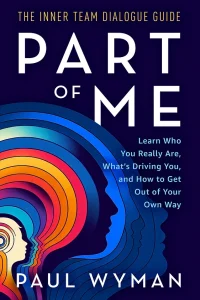
Paul Wyman: Part of Me

Coaching Paul Wyman was a joy. Paul, a seasoned coach, wanted to take a program he designed and make it into a book. When he came to me, he had done several drafts but didn’t feel able to pull it all together. Smart, accomplished and driven, he is like many of my clients who have a specific idea but struggle to organize it.

Paul Wyman It seems counterintuitive that someone would have a model they teach, live programs that they deliver and a solid sense of their material – but still struggle to turn it into a book. But this is super common. Writing a book is its own animal.

But we did it. Paul was able to find time and space to bring his draft into finished form. I don’t often edit clients’ books, but Paul also hired me to edit his manuscript. Now, his book, Part of Me: Learn Who You Really Are, What’s Driving You, and How to Get Out of Your Own Way, is now available in paperback. Paul trains coaches in Inner Team Dialogue, and works with executives and leaders to help them understand themselves better.

Part of Me book Paul Wyman It was such fun to work with Paul on this book and I am thrilled by how well it turned out and how quickly he brought it to the world. From the acknowledgement page of Part of Me:

A huge thank you to my brilliant writing coach and editor Cynthia Morris, for her unwavering support as I discovered my winding path to being an author. This book wouldn’t exist without her clarity, flexibility and insight.

About Part of Me

Based on the premise that we have many parts to our personality, Part of Me reveals not only answers what parts are, it reveals how they work, how they can help you understand your thinking, your emotions and your behaviors, and most importantly, how you can work with your parts to get out of your own way.

This book takes self-awareness to the next level. Fifty of the most common parts of the personality are profiled in detail, so you can identify which is most active in you, which is causing the problems you repeatedly experience, and what to do to get your Inner Team working for you, not against you.


Filed Under: Books for Creatives

August 19, 2024 by Cynthia Morris Leave a Comment

Cindy Lusk: Author of Align and Refine: The Journey of Yoga and Meditation

It’s thrilling to see a client finish a book!

It was a great honor to work with Cindy Lusk to write her book and get onto the publication path. We met in 2001 when I was a student and she was a teacher at the Yoga Workshop in Boulder. I knew right away she was what I consider the ‘real deal’ of yoga teachers. Her ongoing studies of the Yoga Sutras and the way she brought these teachings into her asana teaching made the classes so much more than mere calisthenics.

Cindy epitomizes what I mean when I say I work with smart, soulful people writing world-changing books. Writing a book takes time, and over several years, Cindy focused on getting her ideas onto the page. It’s ideal to work with someone this motivated to get a book done and published.

Here’s what Cindy said about our coaching together

Cynthia’s coaching helped me get started writing the book, put systems in place, and provided tools so I could be successful both practically and psychologically. Her supportive accountability was critical to keep me going when I otherwise may have quit. Cynthia provided a variety of information, suggestions, and feedback that allowed me to discover my most productive and fulfilling creative process. Her support was invaluable in getting a draft of my book done. 

I learned so many skills and gained confidence in my own process that I was able to continue my work independently. When I finished the book and faced the publishing mountain, I returned for more coaching from Cynthia. She supported me through creating a book proposal that was far superior to anything I could have done on my own.  

It has been instrumental for me to have Cynthia in my corner as I’ve moved through this process. My work with Cynthia has taught me about my own process, and what works best for me and instilled confidence in my ability to complete and publish a book. –  Cindy Lusk 

About Cindy’s book Align and Refine

Cindy Lusk, Ph.D., has written the book she wishes she had as a student of yoga nearly forty years ago.

Align and Refine yoga book Cindy LuskAlign and Refine: The Journey of Yoga and Meditation describes the journey of yoga and meditation from the perspective of a modern-day yogi, emphasizing traditional teachings from Classical Yoga and Tantra in a way that is accessible and applicable.

It considers the human condition, the impulse for something more, and how yoga and meditation allow the refinement of one’s individuality, alignment with the highest self within, and the emergence and embodiment of yogic qualities for the benefit of oneself, society, and the world at large.

Find more about Cindy’s book and yoga classes here.


Filed Under: Books for Creatives, Client Books

June 13, 2024 by Cynthia Morris Leave a Comment

Your Artist Knows the Way and It’s Time to Claim That

Sometimes I feel guilty that in the realm of writing and creating, I really know what works for me and what doesn’t. Owning my process and honoring it reduces SO much stress.

I trust myself, and I know how to manage the inner and outer obstacles of making. This allows me to focus on the real work = the very challenging work of writing a good novel!

But then I remember that guilt does no good, and that I have devoted my entire professional life to helping others feel this kind of creative empowerment. I want this kind of confidence for everyone.

My work as a coach focuses on helping people know, love, and trust their own creative process. Sure, people hire me to help them with their writing. But we do that by helping them clarify and honor their own whackadoodle ways of getting things done.

Your Artist Knows the Way

I’ve taken everything I know about how we can honor our creative habits and put it into a program I am certain you will love.

Cynthia Morris creativity coach Your Artist Knows the Way

Your Artist Knows the Way is a free program on Substack. In it, I guide you through writing your own manual for your artist. What do they love? What do they need to create more easily? You’ll find out and capture it in a way that will change your creativity forever.

You’ve probably read plenty of how-to books on productivity and creativity. You’ve possibly failed to stick with their advice and been left feeling like it’s your fault.

I believe the way to being satisfied with our creative output is to know our artist inside and out.

Your Artist Knows the Way is not another how-to program. It’s a know-you process designed to help you release your abundant creativity in fun, empowering ways. 

Each month features a different theme, with three invitations. You can get a free subscription, or you can upgrade to paid interaction with me, discounts on coaching with me, and handy PDFs at the end of the month so you have all the invitations in one place.

You are going to LOVE this! Come on over and check it out. 

PS This is a great thing to do with friends, so pass this on to your creative buddies so you can do it together.

Don’t have creative buddies? They are waiting to get to know you in Your Artist Knows the Way!

Filed Under: Creativity

May 1, 2024 by Cynthia Morris 4 Comments

Why you must create

What’s your plan for staying on track with your writing project this summer? This year’s sunny season is different for me. I have a couple of big projects plus a coaching skills training I am taking. I’m also hosting a 14-week session of Write ON, my coaching group for writers with a project they must focus on. We have a few spots left, and we start soon. Find out if you are a fit for Write ON here. 

Why you must create

If you’re reading this newsletter, you are an artist of some kind. A writer, painter, knitter, gardener, chef…your creativity is a force of nature that you must express. You likely have experienced the consequences when you don’t let your art into your life on the regular. If your creativity is on the shelf too long:

  • a lingering sense of dissatisfaction can permeate life
  • jealousy replaces the joy we deserve to have around our creative drive
  • we lose touch with the part of ourselves that makes us whole.

Our original impulse, the drive to make things that matter, is as necessary as our need to eat, be sheltered and be connected to others. I assert that creating belongs on Maslow’s Hierarchy of Needs.

I’ve been coaching creative people to be their most creative selves for 25 years. When we make space for our creative work, more happiness, more connection, and more satisfaction come almost immediately. This satisfaction ripples out into all areas of their life like a radiating sun. When we’re happy creators, everything is better.

Here’s a note from Tina Bettison, a client who knew she needed her creativity back:

“When I think back to how I felt a year ago – lost, depressed, grieving, unsure of who I was and the point of my existence – and how I feel now, I’m soooo different. Soooo alive. Coaching with you has literally turned my life around and given me back myself.”

– Tina Bettison

Creativity is not optional. Our original impulse must be heeded. I believe that we derive our vitality from our creativity. When we are making things or writing, we feel alive. We feel a sense of purpose. Getting lost in our creative work is its own escape.

You feel most alive and happy when you’re creating. It’s your birthright and it’s who you are. To not create means unhappiness, and dissatisfaction and detracts from the overall quality of life. I believe creating must go on the list of other essentials like food, shelter, love, money.

One more reason why you must create

When I wrote my ebook, Cross the Finish Line, I realized something profound.

It’s okay to dabble, explore, and have a lot of creative interests. And when we finish a meaningful project, we glean the deep gifts of that work. Finishing and publishing my novel revealed to me that I am a tenacious person whose commitment goes beyond the many challenges that arose during the thirteen years it took to write.

Imagine the enormous confidence that I gained from recognizing myself as a persistent person. With that confidence, I crafted a new vision of myself. I used that new self-perception to step up to more creative projects.

I want everyone to be creatively fulfilled – on their own terms. Knowing what works for us is key to making things that make us whole. This belief is at the core of what I am making for you. I hope/plan/intend to launch it sometime next month!

In the meantime, I’d love to hear about the challenges that stand in the way of you fulfilling your creative destiny. Feel free to share your inner and outer obstacles here.

Filed Under: Creativity

April 1, 2024 by Cynthia Morris Leave a Comment

Sort through a Messy Book Draft with a Punch List

Writing a book is messy, even for seasoned authors. Wrangling your material into cohesive shape is real work. There will be times when you sag with despair and cry out “This is a mess!” Rest assured. This is normal. This is not a function of your ineptitude, the lameness of your book or your inability to pull it all together. It’s part of the process of writing a book. Take a deep breath and trust yourself. Let’s look at how to sort this mess out. Be patient; it might take some time.

Depending on where you are with the process, it might be helpful to print the book up. Many of us are writing in one long on-screen document. Scrolling can be a nightmare, and rolling back and forth can contribute to your feeling of chaos. If you have a draft, even a shaggy draft, print the whole thing. Make sure that the pages are 1.5- or double-spaced, with page numbers at the bottom. Reviewing a printed copy makes it so much easier to see the whole. When I went through my printed draft, it was clear that the table of contents needed to be reordered.

With your printed manuscript in hand, step away from the computer. Take your notebook and pen with you. Your plan is to make a “punch list” of things to work on next. This is a term borrowed from the construction industry, where there’s a walk-through of a house before it’s finished or before a sale. The punch list includes things to fix or work on. Make a punch list for your book. You want one list that you can work through methodically later.

Now, back to the messy draft. Read through everything you have written. This read-through is for the purpose of seeing the whole, for distinguishing what’s working and what’s missing. Read like a teacher who wants to help the student make this paper as good as possible. Put check marks, smiley faces or stars next to things that are working. Add to your punch list as needed. Avoid getting caught up in wordsmithing: if you see sentences that you want to revise, underline them or circle words you want to change, but don’t get caught in the details now. Include the bigger things to work on, not the details. These could include:

  • Revise chapter two.
  • Add examples for chapter ten.
  • Research for chapter four.
  • Brainstorm ideas for images in the book.
  • Identify passages that need to be fleshed out.

Your punch list will likely be long. Don’t despair. It’s good to have an objective list of things you can work on. The draft will still be messy, but now you have marching orders of what to improve. This kind of list serves as a project manager.

Once you’ve made the list, you can organize items into categories. My recent punch list includes:

  • to write
  • to do
  • weave throughout
  • to consider
  • plan of action

For each writing session, go to the list and do some of the tasks. Check them off the list to feel a sense of progress. Address as many items on your punch list as you can in each sitting, but know your limits. Notice when you feel “done” writing—you might be getting impatient, rushing and lowering your standards to make progress. The list can also keep you from feeling ambushed by emotions that may arise when you sit down to write. You are just working your way through the list. You might go through this process many times, at least once for each draft. It’s okay—it helps you to know what to do and when.

Excerpted from The Busy Woman’s Guide to Writing a World-Changing Book.

Here’s a punch list I made in Notion for my novel-in-progress. I have whited out the details to avoid spoilers.

Filed Under: The Writing Life

  • « Go to Previous Page
  • Page 1
  • Page 2
  • Page 3
  • Page 4
  • Interim pages omitted …
  • Page 46
  • Go to Next Page »

Primary Sidebar

Join us in Paris!

Cynthia Morris novel Her Lisbon Colors

Let’s Connect

  • Email
  • Instagram
  • LinkedIn
  • Substack
  • YouTube
Finally be the creator you came here to be
  • This field is for validation purposes and should be left unchanged.

Copyright © 2026 Original Impulse. All Rights Reserved. Privacy Policies.