• Skip to main content
  • Skip to primary sidebar

Original Impulse HomepageOriginal Impulse

  • The Writing Life
    • Coaching for writers
    • Write ON
    • The Busy Woman’s Guide to Writing a Book
    • Blog
  • Workshops
    • Events
    • An Illustrated Feast
    • Paris Sketchbook
    • Write ON
  • Speaking
  • Books
    • Her Lisbon Colors
    • Client Books
    • Books for Creatives
    • Book Recommendations
  • About
    • About Cynthia
    • Successful Clients
    • Media
  • Contact

The Writing Life

December 2, 2025 by Cynthia Morris Leave a Comment

Gifts for writers that cost nothing or next to nothing!

You may or may not be in holiday shopping mode. In case you are, today I offer several f*ree or inexpensive gifts for writers. That’s right, the scribbler in your life!

Because, wouldn’t it be great to give abundant, generous gifts to writers whose words have changed us?

It’s possible! I have ideas for free gifts for the writers in your life. It’s easy to do, and they never even need to know you’ve gifted them.

It’s hard to conceive how much authors and writers need you, our readers, to help us spread the word. Most of these gifts require no money and just a few minutes of your time.

Use my ideas below and add your own free gifts for writers.

Reviews make a HUGE difference

We really need readers to help spread the word. Reviews are not something an author can do herself. Make it easy to write reviews.

Make a list of your three favorite books this year.

Write and publish a review of those books. (You can use the same review on independent sites like Fable, The Story Graph, Amazon, and Goodreads.

Hint: reviews can be 1-2 sentences. Pretend you are telling me what you love about it. Feel free to record this and transcribe it.

Get their books on buyers’ radar

Help authors spread the word!

Order their book from your local library.

Order a copy of their book for yourself or as a gift from your local independent bookstore.

Go on Goodreads and add their book to your shelf. Add relevant tags to help people find it. Her Lisbon Colors tags could be: upmarket fiction, travel fiction, Portugal, Lisbon, artist.

A friend pointed out that Her Lisbon Colors is on a list alongside other quite popular novels. This made me so happy! Please add ‘book club fiction’ to Her Lisbon Colors on your Goodreads shelf. Takes just a minute!

Make a stack of your favorite indie authors’ books. Photograph it, post it on the socials and tag the authors. Here’s one I posted on Indie Author Day last month. (Some are mine, some are my clients’ books, others are friends’ books. See bottom of the post for titles and author names. >>>

For newsletter writers

Go into your spam folder and mark all the Substack newsletters as ‘not junk/spam’.

Don’t just follow; subscribe to their newsletter.

Pass their newsletter on to someone who will love it.

Leave a comment letting the writer know how their words have affected you.

Highlight favorite books, newsletters, and writers in your annual review. Comment on how they have impacted your life.

What ideas do you have to support writers during this season and beyond? Share them below. And THANK YOU for all your support of me and my books.

Titles and authors of books in the photo above: 

Override! What If There Was Another Way? Anne Ditmeyer

The Busy Woman’s Guide to Writing a World-Changing Book Cynthia Morris

Permission to Glow Kristoffer Carter

Swing Ashleigh Renard

Some Dark Force Christina Boufis & Victoria Olsen

No Big Deal Torey Ivanic

Missing Tyler Tami Palmer

White Plains David Hicks

Stories I Can’t Show My Mother Ann Tinkham

Her Lisbon Colors Cynthia Morris

Chasing Sylvia Beach Cynthia Morris

Rise of the Reader Nick Hutchison

Part of Me Paul Wyman

I’d Rather Be in the Studio! Alyson Stanfield

Through Frankie’s Eyes Barbara Techel

Holy Wildness Tonja Reichley

Open to Love Dr. Horsley & Dr. Powers

Filed Under: Books for Creatives, The Writing Life

August 4, 2025 by Cynthia Morris Leave a Comment

AI Will Never Be Able to Replace This

I’ve been paying attention to AI and using it to help with my business strategies and planning. While I still have misgivings, I feel I need to understand this technology and the role it plays now and in the future.

For those of us who LOVE ideas, AI is a no-holds-barred spree of possibility. The plans! The ideas! It’s all so…vomitously overwhelming.

For someone who loves ideas and loves executing on them, more ideas are not valuable to me. It gets vomitous when I am hosed with so many possibilities that I am paralyzed. I have pages and pages of ideas for promoting Her Lisbon Colors. So many that they are rendered useless. I’m left not with a great plan but with more confusion than when I started. We don’t need AI to trigger indecision swirl, do we?

If you like floating endlessly in idea land, great. Enjoy that! If you want the deep satisfaction of bringing ideas to life, read on.

Using AI for project vetting and development

I recently used ChatGPT to bounce my idea of a limited series Stumbling Toward Genius podcast based on the themes of my novel. Chat was super helpful for:

  • Discerning whether this was a good idea or not given my goals. (I always tell it to not fluff me up or flatter me but give me real data.)
  • I gave it the topics I had and asked what be interesting to my listeners.
  • I asked what was missing or needed strengthening. This prompt gave me the most helpful input. It offered new perspectives and challenged me.
  • Deciding to go ahead with a limited series of short episodes, I generated a table of contents for my podcast based on my existing topics.
  • Chat also gave me ideas for how to post the podcasts on YouTube as well.

I’ve got scripts that I drafted as social media posts, I have a plan and I have all the ideas for how to implement.

What’s missing? I’ll wait while you guess…

That’s right! Actually taking action on these genius ideas and plans. How’s that going to happen?

I can do what I usually do – set a deadline. These are often based around travel. I leave for Lisbon and Paris on September 25th, so ideally all episodes would be done and published/scheduled.

As a seasoned coach and maker of things and experiences, I know I can do this. But what about other projects that have a higher emotional burn? The stuff that I’m scared to do? For that, I need support. Someone to help make me do what I say I want to do. And I suspect you need that kind of support, too.

Here’s where AI completely fails

I’ve coached hundreds of creatives over 25 years, and almost every single client has cited accountability as the main reason they hire me. Sure, they need a thought partner, a hand-holder, an emotional support person. All of that is valuable. And, super important is someone there on a regular basis to make sure they actually do what they say they will do.

There is nothing wrong with needing this. We all need accountability. We are human, complex, messy, distractible, and emotional. 

There will always be the weeks when the shit hits the fan. Contrary to what we’d like to believe, there is no ‘normal’ week. Always, always, always there will be something planned or unplanned that disrupts our ‘write every day from 8-10’ schedule. What happens then? More ideas from AI will not save your bacon.

This is where my clients thrive with me. I am always helping my writers and artists:

  • adjust expectations
  • process disappointment
  • reset according to current conditions
  • make satisfying progress on their terms.

No AI can do that in any meaningful way.

AI Cannot Replace This

AI will never be able to replicate what happens in a 1:1 or group coaching environment. Group coaching has the power of the collective. I’ve been leading versions of my popular Write ON for a decade now, and I am 100% certain that the magic and connection that happens there is not in AI’s skill set.

Many of us join groups not for the leader, but for the companions who will travel alongside us. We gain so much from others’ experiences.

Working alongside others helps us:

  • normalize the ups and downs of the creative life
  • learn from how others do it – a springboard to reflect on our own processes
  • gather valuable resources we would not have found otherwise
  • and quite simply but quite powerful – have more fun.

In Write ON, we work in weekly sprints. We focus on gathering insights on how we best navigate the ebb and flow of our creative lives. I coach us through it, week by week. And, I paddle alongside with my own project, sharing the challenges and wins in real time.

And guess what happens at the end of our Write ON cycle? A ton of progress, that’s for sure. Here’s something AI will never deliver to you: 

  • confidence in your abilities
  • satisfaction that comes from doing the work
  • personal and creative empowerment that you’ve cultivated by showing up
  • earned experience and wisdom that you can apply to anything you create in the future.

I’m not worried that AI will replace me and my coaching. Sure, you can ask AI for ideas and even a detailed plan. But someone alongside you helping you grow and glow as you make your beautiful things, that’s for us humans.

Enrollment is open for Write ON, which starts later this month. We have a few spots left – I cap enrollment so there’s no chance to hide in a sea of participants.

This is a 16-week adventure for those with a project they need a container for. It’s a small group, so there’s no back row to hide in, no ‘falling behind’ and no wasting your money on another program that gets you nowhere.

It’s fun, effective and just the right amount of demanding. Get all the details here.

P.S. This article was entirely written by me, Cynthia Morris. AI helped slightly with Grammarly, but mostly I ignore those suggestions.

P.P.S. Please do not use AI to outsource your writing! Guess what? It shows! I can tell when someone’s social media posts are written by AI. AI is great for marketing, interpreting legal documents and wasting a lot of your time sucked into screen mode.

Filed Under: Creativity, The Writing Life

July 15, 2025 by Cynthia Morris Leave a Comment

The Author Care Kit I Wish I’d Given Myself

What a month! I almost feel like a different person. After launching the novel, I slid into what authors know is the inevitable letdown. It makes sense – for 2.5 years, I have had quite a force of momentum. Writing, editing, and publishing Her Lisbon Colors consumed the bulk of my creative energy. It also gave me a lot to focus on and quite a bit of meaning.

Cover for Her Lisbon Colors novel Cynthia Morris fiction book I’ve moved out of my funk and have shifted to promoting the book. It would be easy to move on! People ask, “What’s next now that the novel is out?” Making sure it has a life! It truly is like a baby that needs a lot of nourishment to stay alive. I’m committed to a year of putting the word out there.

This requires a lot of bandwidth, courage and focus. For all the hard work of writing and turning a manuscript into a book, the work of promoting is much harder. I am sharing about this through December at Stumbling Toward Genius. Are you subscribed?

My author self-care kit for publishing a novel

Oh I wish I had an ‘author care kit’ of sorts! In retrospect, I know what I needed, and I will share it here. This is for the sake of helping me debrief and sharing with you in case my bloops are of service to your own projects.

1. Take a break with rejuvenating treats. It really felt like I was zoomig on a highway for months and months and then exited. But I still had the feeling of movement, like I needed to keep working toward the launch deadline. I went away with Steve for a hot springs weekend and it was bliss to be offline and soaking in the water.

2. Lower expectations I have informally renamed myself the ‘lower the bar coach’. I know that our high expectations do nothing but turn around and bite us hard.

I don’t know what I thought – that I would get rave reviews right away? All I know is it felt very quiet for the weeks after the launch. A lot of friends said “I’m reading your book and loving it!” and then weeeeeeeeeks passed and I didn’t hear anything.

My inner critic had all kinds of stories about this, mainly that they didn’t like the book and didn’t know what to say. (Tip for friends of authors – say nothing until you’ve finished reading!)

3. Stay connected to the original impulse. Why MUST I put this book into the world? When we put stuff out there, we are now connecting our ideas and values and creative soul with the world. This is the cool thing about art – once it’s out there, it has a life of its own.

Staying connected with my WHY helps me know that the book is important to me, no matter how it is received by the world. I loved writing this book, I loved how it turned out, and my job is to keep loving it.

4. Have therapeutic supports in place. If you know me, you know that the reason I help creative people bring their bright ideas to life isn’t just for the sake of getting stuff done.

I believe in stretching and growing as humans. I love coaching people through the fears and insecurities we all face. I was so focused on all the details of making and launching a book, I didn’t take time to tend my emotional self. Luckily I have therapeutic support in place now and am feeling much more grounded and sane.

5. Forgive yourself for not doing everything, and for not doing everything RIGHT. My goodness, there are a million things involved in getting a book out there! We’re advised to stay focused on a few avenues of promotion, but it’s hard! I have made so many mistakes and I often still feel ‘all over the place’.

6. Make a plan for ongoing promo. I was sitting poolside on a Friday afternoon when clarity around how to stay on track with my novel promo came to me. I felt that recognizable spark of enthusiasm light in me. I made notes and now am on week two of 100 days of Book Promo.

With a million things to do, coupled with the emotional labor of that work, it’s easy to lose steam and do nothing. Having structure is vital for me, and I suspect for you, too. (This is why I love Write ON so much! Structure + camaraderie hosted by a certified coach = much more writing joy.)

What surprised you from this list? What would you add to your own author care kit? Tell us below.

Filed Under: Books for Creatives, The Writing Life

June 3, 2025 by Cynthia Morris 16 Comments

Why the stories you write are boring

I was in Lisbon when the total blackout hit the Iberian Pennisula, removing power from all of Spain and Portugal for the better part of a hot April day. This was interesting! Nothing like this had ever happened to me. Of course I would write about it.

I made notes that day and night to capture the sensual experiences of being without phone or light or access to my rented apartment. I wrote a draft of the story back in Denver.

But then I blundered into territory my clients and I always stumble into. I was three pages into telling the details of the blackout – trams stalled in the streets, all shops dark and locked, no cell phone access at all. Three pages in and still was not even close to getting to why this mattered.

What went wrong? We all think our stories are good – and they are! These tales are interesting to us, but are likely only mildly interesting to a reader. I’ve identified the problem. It’s a case of anecdote versus story. Here’s an example.

Anecdote versus story or boring versus life-changing

Anecdote: On the way here, I saw a performing monkey! It grabbed my beret and put it on and played the accordion! It was so funny!

Story: On the way here, a performing monkey grabbed my beret and played a song on the accordion. The song was the one I always have in my head when I think of my French life. All this time I had been in love with France, thinking the song and the beret made me more French. But my facade was easily taken on by a street monkey. I had never felt so cheap and superficial in my life. Now I question the things I love – am I such a cliche? Or was the song a sign? Did my beret hold the song about Paris but also all my hopes and dreams?

Do you see the difference? A story has a deeper meaning, something more important to the narrator than ‘isn’t that funny?’

We tell anecdotes to fill time and space and share an experience we had. We write stories to understand something on a deeper level and to convey some meaning to the reader. As writers, we have to work to excavate the meaning.

The blackout story was just an anecdote. Until I dug deeper for a reason to tell this story, it wasn’t worth continuing. I was bored adding up all the ‘and then this happened’. (If you get bored writing, chances are your reader will be bored reading.) I didn’t have the bandwidth to really delve in to discover what matters, why it matters to me, and how it might matter to you, the reader.

People telling anecdotes mostly just want someone to hear their story. People writing stories want to move the reader with a new insight, feeling, or idea. They want to be moved themselves.

If you are stuck in anecdote territory, wondering if it’s interesting to a reader, dig deeper.

Three ways to make sure your stories aren’t boring

Check into your values. What is meaningful for you in this story? I couldn’t find many of my values honored in the blackout story. But the piece about speaking Portuguese while in Lisbon? I had at least 8 values in that story. Writing it felt alive and meaningful.

WAIT. After you’ve pecked at the story a bit, take a break. Ask yourself Why Am I Telling this story? Why does it matter to you?

Who cares? When we get stuck, we often think, who will find this interesting? Who cares? If you know who you are writing for – and you should – it will be easier to know if your reader will care and if so, what they will get from this.

What do you want for the reader? Why MUST they read this story?

When drafting my novel, I had to cut many major chapters. Whole sections! I loved these scenes. But they were merely interesting, not essential to the novel. Editing skills are as important as drafting skills.

Get your copy of Her Lisbon Colors here. 

I hope this has helped you to improve your storytelling skills. Please let me know what this illuminated for you in a comment below.

Filed Under: The Writing Life

May 10, 2025 by Cynthia Morris Leave a Comment

What a Book Coach Does: Developmental Editing and More

This year marks my twenty-sixth year as a coach. I knew when I came upon coaching that this would be my lifelong career. It's an honor and pleasure to serve the smart, soulful people I call my clients.

This week, I want to share a peek behind the scenes of my work with clients. Once, my dad, with a puzzled look, asked me, “What do you do?”

I get it. As a coach, a lot of my work is not visible. Recently, I shared about my client Donna Erickson’s newly published book. Not every day is a pub day, and the labor of our creative efforts make up the moments of our days. I believe they deserve attention.

You may wonder what Cynthia does with her clients and how she might help me.  I want to share what my other clients are up to and how I am helping them.

Come into my coaching studio to see the magic that happens!

Synthesizing a message for a keynote

Since her book launch two years ago, Paula has been busy speaking and publishing her new newsletter. Recently, she was in Mexico City to give a keynote and an all-attended workshop at a Montessori conference.

She worked hard to get her talk right but was still frustrated. She had too much in there! (Sound familiar?)

After hearing her out and acknowledging her frustration, I helped her shift her thinking about what to include so it would be easier to trim the presentation.

After we did this, I restated how we’d made this shift so she now has those skills to edit anything she writes more easily.

Making the most of an in-person event

Paula had a blast, and we debriefed afterward. Hearing her stories was so inspiring. I pointed out that she had at least six pieces she could write as a short series about the Mexican Montessori community and what she took away from the conference.

I am always on the lookout for ideas that my clients may miss. Highlighting what is of interest to others is one of my gifts.

Developmental editing for novels, non-fiction books and memoirs

Several other clients are writing their books. My role is to help them shape their ideas into a cohesive message. We talk about organizing their ideas. No matter how smart and articulate we are, it’s super hard for us to get to the essence of an idea and communicate it succinctly. Even for clients writing a book based on a model they’ve worked with for years, it can be hard to shape that into a book.

This work is called Developmental Editing.

I well know the challenge of this work, both mentally and emotionally. Then there's the work of organizing our materials. Documents, spreadsheets, outlines, drafts...this really is at least half of the work of making a book.

Crafting a compelling message for a book proposal

I’m helping another client with his book proposal. This is similar to developmental editing, and it’s also about thinking about how our books will sell. It’s incredibly hard work to shift from author to seller of your idea.

I hold space for the thrash that we all endure when we are trying to crystallize our ideas into something compelling and saleable. I'll often feel bad that it's so hard for them. I have to be tough. Sometimes I think - am I too tough? Then I realize it's not me that is being hard on them. The work is hard. I hold my clients to a high standard that equals their dreams and goals. I would expect the same from my coach.

 A book coach is more than an editor

Speaking of emotions, a lot of my work with clients is helping them navigate all the emotional churn that accompanies our creative work. You know what I mean, TET. The doubt, the insecurities, the overwhelm and confusion…that stuff is real. The emotional churn is the real thing that keeps us on the sidelines of our creative dreams.

Everyone, no matter how smart and accomplished, feels the full range of creative ‘crazy’. 

As a trained and certified coach, I have skills to help people navigate the ever-shifting terrain of their inner lives. Beliefs, feelings, and thoughts can work in our favor when we are aware of them and make choices.

As someone who has created and launched books, programs and creativity workshops in Europe, I know full well this rainbow of emotions. I bring empathy and, when useful, brief stories from my own creative work to help normalize the challenges.

Thank goodness I discovered coaching all those years ago in a magazine article. Thank goodness I trusted my instincts to follow this path. I continue with ongoing training and development, and I continue to love this work that brings so many of my skills and gifts to bear.

Do you have a project you could use an ally on? I’d love to help. I am accepting new clients this month. If you want to get me on your team, book a discovery session now to see how I can help you bring your ideas to life.

Get a sense of how I work with my book, The Busy Woman's Guide to Writing a World-Changing Book.

Filed Under: Books for Creatives, The Writing Life

May 8, 2025 by Cynthia Morris Leave a Comment

Celebrating a new book by Donna Erickson

I celebrate my client Donna Erickson’s book, Rooted at the Edge: Ranching Where the Old West and New West Collide. (University of Nebraska Press/Bison Books, 2025).

Donna Erickson book This is a great book that speaks to one of the biggest issues the US faces now – the conflicting interests that have sprung up in different communities. Think farmland that has been repurposed for big box plexes.

Donna’s family story and her professional background come together for a compelling and informative read about how land use and communities are changing in Montana. 

It was a true honor to be part of this project. Donna wanted a book deal, so she hired me to help her write her book proposal. 

I knew when I read a sample chapter that this book would be a big hit. And yet, the work of writing a winning book proposal is not for the faint of heart. I call it a ‘stand and deliver’ moment. It’s a TON of work, and is very emotional. 

Luckily, Donna was up to the labor. She finished her proposal in four months. We had discerned that a university press was the best choice for this book. Within hours of submitting it to the University of Nebraska Press, they called her. Shortly after, she had a book deal.

This was a glorious moment, and today, holding the book in my hands, filled with her wonderful writing and her photographs and illustrations, I am thrilled for Donna. 

Donna’s writing is personal and professional, heartfelt and super-smart. Get your copy of Rooted at the Edge now. 

Bring yourself closer to creative success with me

My coaching calendar is open for new clients starting in May. Make real progress on your book or other creative project by booking a discovery session now. 

Filed Under: Books for Creatives, The Writing Life

December 17, 2024 by Cynthia Morris Leave a Comment

Left and Right Brain Coaching Skills Save My Clients Time and Angst

Clients come to me because they want to write a book or articles for their work. They’re smart, soulful, and bursting with inspiration. They have lots of ideas and papers everywhere. They are ready to put their ideas into shape, but they don’t know how to get organized and get started. I get it!

There are two major aspects of writing that I help people with, and they may surprise you.

Left-brain systems understanding

Ironically, one of the main skills I bring to my coaching clients is structure. It turns out that my genius zone is helping people organize all those ideas and papers into smart, soulful books that make a difference in the world. Clients often say I have a laser-sharp focus and ‘hit the nail on the head’. I see what they don’t. This comes out when we’re brainstorming and I’m helping a client synthesize their many ideas into a coherent whole.

It’s so fun to help them bring their ideas into shape. The clarity they get allows them to get their ideas down much more quickly. But that’s only half of the work.

Right-brain empathy

If writing were merely a matter of organizing our ideas and materials, it would be much easier. But writing is one of the most vulnerable and scary things we can do. We’re called to be honest, to be generous, and to bring language to what we care deeply about.

Three main monsters stand at the gate, preventing us from entering our genius zone of writing:

  • fear of not having something to say
  • fear of merely repeating what is already out there and
  • fear of not being a good enough writer.

Writing a book takes time because we need to deal with these so they don’t keep harassing us and making writing a misery. No one is immune to insecurity about writing – not even my smart, accomplished, and soulful clients.

Coaching skills are real

My coach training taught me how to serve my clients by actively listening, staying out of my own story, and moving them inward to understanding and outward to action on their goals. I cannot emphasize enough that the training I started in 1999 and continue to this day is why I can succeed with my projects and help my clients succeed with theirs.

In all my work, I use my left and right brain capabilities. Designing and leading retreats, writing books, and coaching others to realize their creative dreams bring all of me to the table. I LOVE that. Empathy, organization, and seeing both the big picture and the details are the skills that make writing a book—or anything—possible.

What monsters linger at the gate to your writing joy? Share them in a comment below. 

I’ve shared a lot more about how to get organized here. 

Filed Under: The Writing Life

April 1, 2024 by Cynthia Morris Leave a Comment

Sort through a Messy Book Draft with a Punch List

Writing a book is messy, even for seasoned authors. Wrangling your material into cohesive shape is real work. There will be times when you sag with despair and cry out “This is a mess!” Rest assured. This is normal. This is not a function of your ineptitude, the lameness of your book or your inability to pull it all together. It’s part of the process of writing a book. Take a deep breath and trust yourself. Let’s look at how to sort this mess out. Be patient; it might take some time.

Depending on where you are with the process, it might be helpful to print the book up. Many of us are writing in one long on-screen document. Scrolling can be a nightmare, and rolling back and forth can contribute to your feeling of chaos. If you have a draft, even a shaggy draft, print the whole thing. Make sure that the pages are 1.5- or double-spaced, with page numbers at the bottom. Reviewing a printed copy makes it so much easier to see the whole. When I went through my printed draft, it was clear that the table of contents needed to be reordered.

With your printed manuscript in hand, step away from the computer. Take your notebook and pen with you. Your plan is to make a “punch list” of things to work on next. This is a term borrowed from the construction industry, where there’s a walk-through of a house before it’s finished or before a sale. The punch list includes things to fix or work on. Make a punch list for your book. You want one list that you can work through methodically later.

Now, back to the messy draft. Read through everything you have written. This read-through is for the purpose of seeing the whole, for distinguishing what’s working and what’s missing. Read like a teacher who wants to help the student make this paper as good as possible. Put check marks, smiley faces or stars next to things that are working. Add to your punch list as needed. Avoid getting caught up in wordsmithing: if you see sentences that you want to revise, underline them or circle words you want to change, but don’t get caught in the details now. Include the bigger things to work on, not the details. These could include:

  • Revise chapter two.
  • Add examples for chapter ten.
  • Research for chapter four.
  • Brainstorm ideas for images in the book.
  • Identify passages that need to be fleshed out.

Your punch list will likely be long. Don’t despair. It’s good to have an objective list of things you can work on. The draft will still be messy, but now you have marching orders of what to improve. This kind of list serves as a project manager.

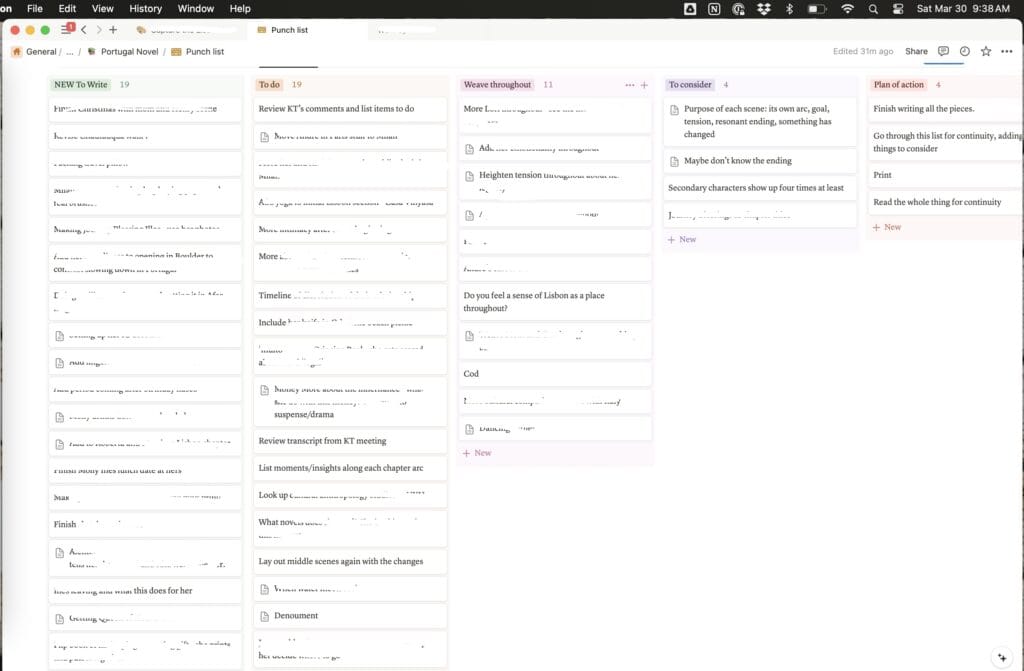
Once you’ve made the list, you can organize items into categories. My recent punch list includes:

  • to write
  • to do
  • weave throughout
  • to consider
  • plan of action

For each writing session, go to the list and do some of the tasks. Check them off the list to feel a sense of progress. Address as many items on your punch list as you can in each sitting, but know your limits. Notice when you feel “done” writing—you might be getting impatient, rushing and lowering your standards to make progress. The list can also keep you from feeling ambushed by emotions that may arise when you sit down to write. You are just working your way through the list. You might go through this process many times, at least once for each draft. It’s okay—it helps you to know what to do and when.

Excerpted from The Busy Woman’s Guide to Writing a World-Changing Book.

Here’s a punch list I made in Notion for my novel-in-progress. I have whited out the details to avoid spoilers.

Filed Under: The Writing Life

February 1, 2024 by Cynthia Morris 8 Comments

Celebrating My Thirty-Year Writing Anniversary

Thirty years ago, a mile from where I type now in Denver, I began my writing life in earnest. I wanted so badly to write, but I had no idea how or what! In a class called Writing the Wild Woman, I learned how to free-write, scribbling alongside other women. Afterward, we howled. Because, wild women and all.

It’s hard for me to believe I’ve dedicated 30 years to writing. As a girl, I spent most of my free time reading. I wanted to be a writer. And so, with lots of ink and angst, I have fulfilled a childhood dream. Despite the baby-blue typewriter my parents gifted me, I didn’t have the courage to start writing until my mid-20s.

In my garage are boxes filled with hundreds of journals. I haven’t kept everything but have files full of poems, articles, and essays. All the unseen words speak to the invisible labor that is the writing life. What is visible are the words I managed to bravely put into the world. If we want to have an impact, we have to overcome our fears and insecurities.

I like to say that if you want to know yourself deeply, take up an art form or start a business. All your demons will rise up to meet you. By continuing to show up, you learn that you are more than a handful of insecurities and hopes. Writing is a most splendid way to meet yourself in ink and hopefully, come out loving yourself a bit more.

Writing has offered me a powerful path to personal growth and empowerment. This is what I want for my clients. Not that they become writers, but that by becoming writers they become a stronger version of themselves.

My version of success

My writing life does not resemble what I dreamed of in my Ohio bedroom. I have not been ‘discovered’ by a publisher. I am not a best-selling author and my novel has not been adapted to a film starring Amy Adams. Dang! But how often do our actual lives match up to our imagined lives? I didn’t get married until I was 50, and my husband doesn’t look anything like I’d imagined. And yet, he’s perfect for me. As is my writing life.

If I look back and tally the wins, I’m proud of my writing life. I’ve written and self-published eight books and am working away at my ninth, a novel. I’ve published countless articles, mostly about writing and the creative process, productivity, and a few about yoga. I’ve learned how to write sales copy, because as a solopreneur, being able to promote my services was vital to survival. I don’t earn a living from writing. I have earned over $100,000 from writing – a glorious $3,333 per year!

You may know that I’m into a lot of things. I’m a writer, artist, gardener, traveler. Through my business, it seems like I’ve done a million different things, from retreats to online classes to monthly writing challenges. People call this ‘all over the place.’ Maybe so. When I look over the landscape of my writing life, I see a map of my abundant curiosity and creativity.

Aside from any outcome, my biggest success is that I kept writing. Even as my creativity has led me all over, writing persists. I’ve savored a lot of little writing victories. I have learned so much about myself and the art of writing things people (hopefully) want to read. I have the freedom to write what I want. My days involve a lot of writing. From commenting on clients’ writing to writing my novel to writing this essay, I see my values threaded through all my words: honesty, integrity, purpose, creativity, love of language and humor. Showing up to write means showing up to be me. 

Thirty years in, I am astonished to discover that even though I wander freely among all the creative outlets I love, I have become a person of tenacity and commitment. I am willing to keep at it even when writing feels like an emotional tsunami. The rampant rejections and disappointments have fostered a healthy sense of humility in me.

We want to write because we have something to say, and we want to be heard. There’s no way to measure how my writing has impacted the world. I only know that by showing up despite all the fears and doubts*, I have cultivated a healthy sense of self-respect. Whatever the outcome, I have honored this life-long impulse to write. I plan to keep writing, and friends, I hope you do, too.

Early ‘author’ photo! 1993
Cynthia Morris writer photos anniversary
Dancing it out as a bookseller at Capitol Hill Books, Denver, 1995ish
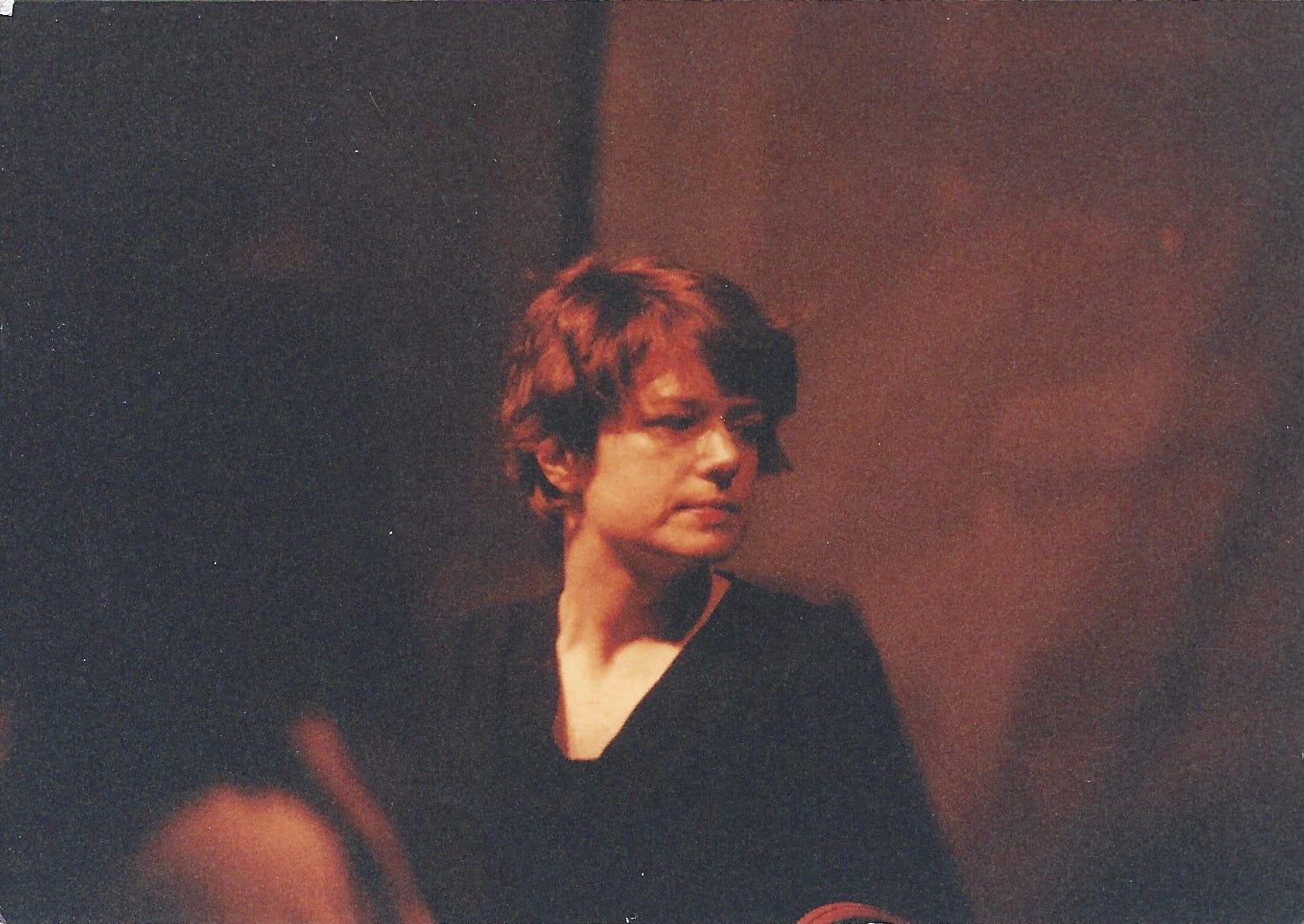
Onstage performing a monologue with HAG (Her Acting Group) 1996
Poet in the Window at Capitol Hill Books, celebrating National Poetry Month 1996
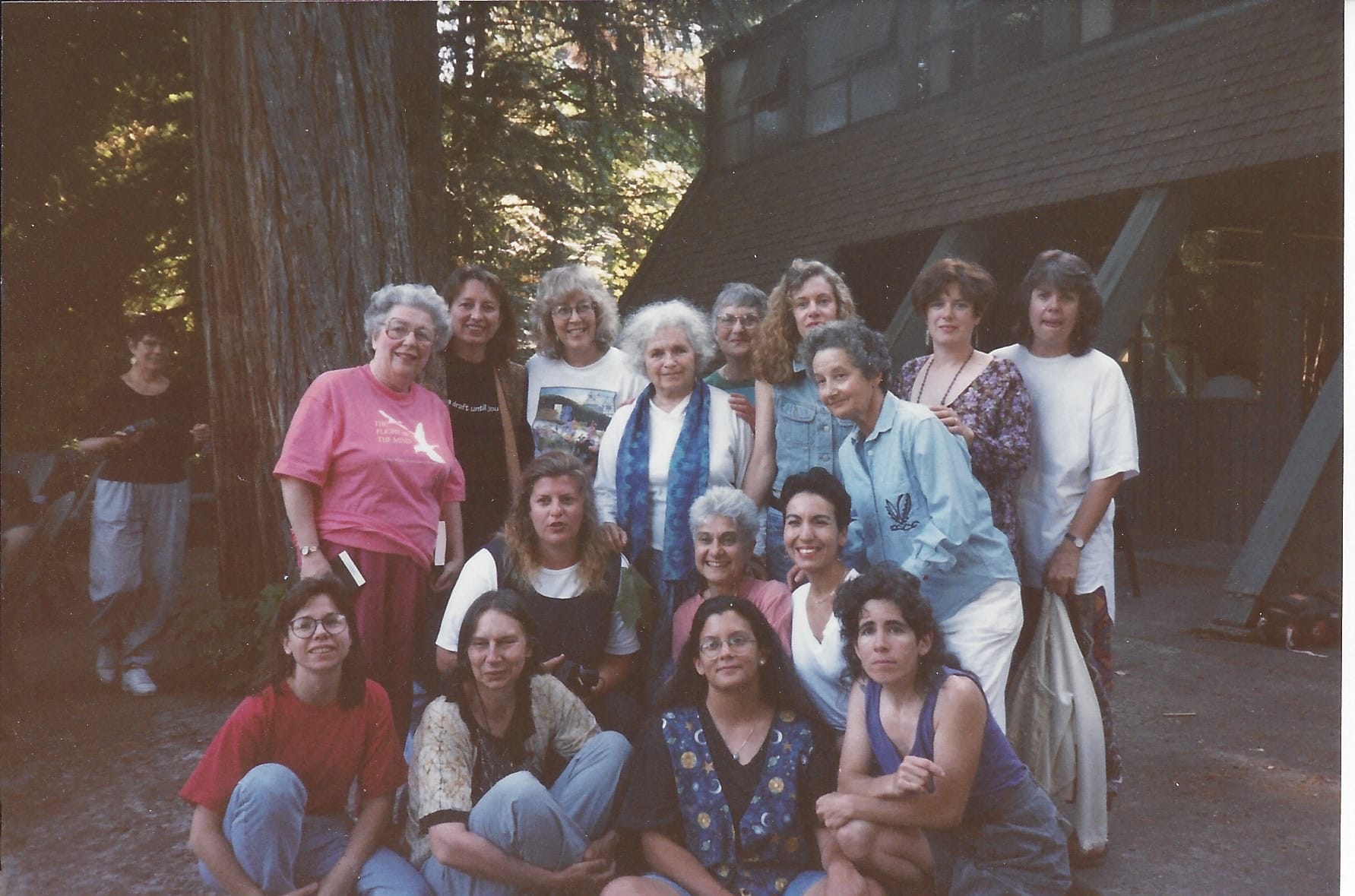
Flight of the Mind writing workshop in Oregon with Grace Paley, 1995
Reading at Boulder Bookstore for my first book, Create Your Writer’s Life, 2006
Mapping out my first novel with index cards, circa 2007
Book launch for my novel Denver Women’s Press Club, 2012
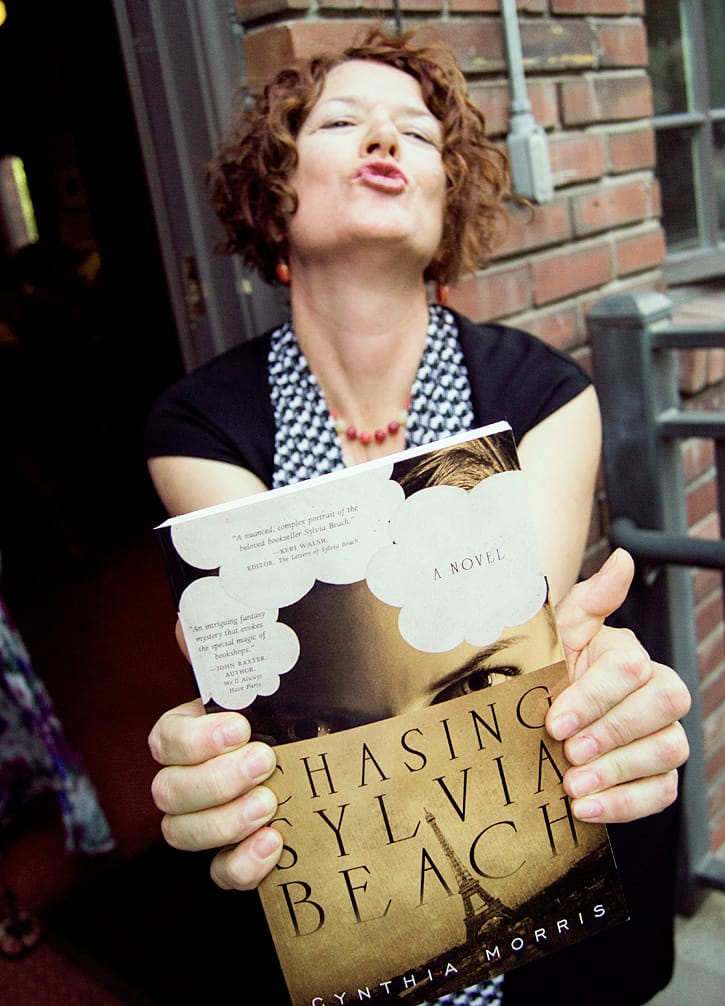
Vamping with novel Chasing Sylvia Beach 2012
Reading at Tattered Cover for The Busy Woman’s Guide to Writing a World-Changing Book, Denver, January 2020
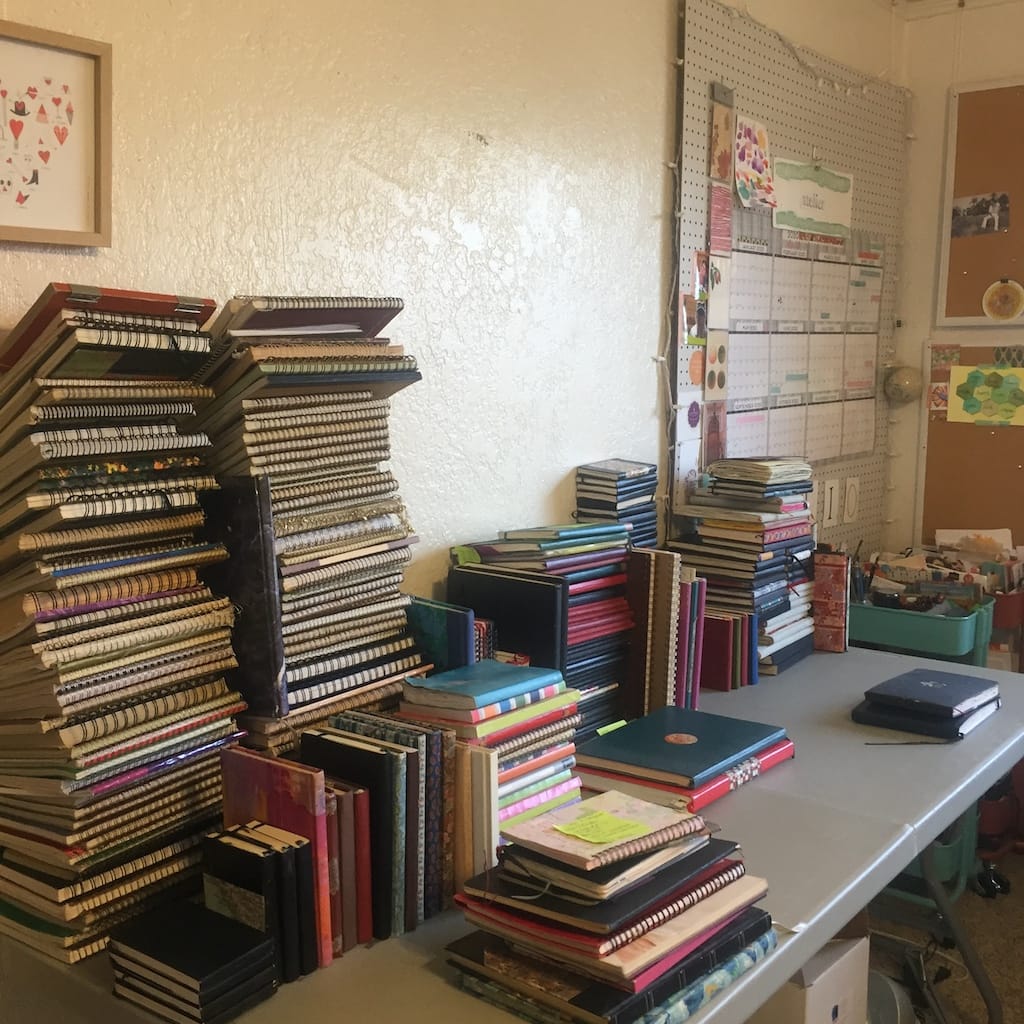
My writing notebooks, March 2020
Hot air balloon chef in Switzerland, 2000, nothing to do with writing but that toque! Those braids!


*Spell-correct changed that to donuts. If ONLY my writing were fueled by donuts!

Filed Under: The Writing Life

December 20, 2023 by Cynthia Morris Leave a Comment

A banner year for writers

It turns out 2023 was a banner year for my book coaching clients. I am thrilled to share their work and successes with you. May their example inspire you to get your own words into the world.

Three surprising things about writing any book

I’ve been helping writers get their words on the page since 1999. Believe it or not, I love it more than ever. I learned so much this year about writing and how to help writers.

You may know this already, but writing a book is a THING. Even if you’ve written a gazillion words, a book is its own animal. People are often blindsided by what’s involved, so here’s a heads-up.

  • Writing a book is less about writing and more about organizing.
  • You can build a wildly successful marketing plan based on your strengths and gifts even without a huge platform.
  • The thing that makes writing easiest is the thing people resist with all their force. I have to really work it to get my clients to surrender resistance and identify their reader.

You might wonder, “What does Cynthia do with writers?” I help smart and soulful people:

  • organize their ideas and pull their writing into a book
  • write and organize a book proposal, a massive marketing undertaking
  • develop ideas and articles in a coherent and powerful body of work on Substack and LinkedIn
  • strategize promotional plans and tactics that honor the writer and their goals.

Celebrate my clients’ wins with me

Paula Preschelack published her book The Montessori Potential: How to Foster Independence, Respect, and Joy in Every Child with Chicago Review Press. We’ve been working on this for years, so this was a huge achievement. We worked on how she could get the word out. Paula is a public speaker so we focused her promotion efforts on speaking engagements and also LinkedIn posting. I wrote a case study about our work together here. 

Cindy Lusk published her book Align and Refine: The Journey of Yoga and Meditation. I met Cindy at the Yoga Workshop in Boulder decades ago and always believed in her teaching style and her commitment to yoga. I’m thrilled to see her book come out.

Margaret Frolich, an Associate Professor of Spanish, published her second book Sexual Diversity in Young Cuban Cinema. I don’t work with many academics, but I helped Peggy to find flow and ease even under intense deadlines and work as the chair of her department.

I coached Donna Erickson to write a winning book proposal. This rarely happens, but she immediately got a book deal with the University of Nebraska Press (Bison Books imprint) for Rooted at the Edge: Where the Old and New West Collide. The book reveals the tensions of ranching at the edge of western towns, depicting a threatened Montana landscape steeped in history, conflict, and beauty.

Paul Wyman finished a draft of his book on parts work. I look forward to editing it in January. I love working with coaches who have a body of work they want to bring to a larger audience.

Christine Ruch is the founder of Fresh Thymes. (My favorite Boulder restaurant!) Christine wanted to write about food and health as part of her major career shift. I helped her organize her ideas and write powerfully for her Substack newsletter The Fresh Life. 

Tina Bettison’s Substack Gathering Our Bones is a delightful, creative space for women who want more from their lives and creativity. Tina was a member of Write ON where we helped her bravely launch her newsletter.

April Allderdice is CEO of an organization working at the nexus of clean energy, job creation, environmental justice, and climate change. She’s smart and soulful, and it’s been a delight helping her craft her ideas into compelling articles on LinkedIn.

Nancie Turner finished a draft of her novel and hired an editor. As someone who did this recently, I know what a big leap it is to invest in professional feedback. Nancie also crossed something off her to-do list: she got temporary tattoos. Inspiring messages on her wrist helped her get to the finish line of her draft.

I acknowledge my clients who have devoted themselves to their writing and aren’t at the ‘put it into the world’ stage. We are deep in the process of learning what they want to write and how to say it. I salute Aevea, Bibiana, Carla, Chris, Christina, Emilah, Jesse, John, Laurie, Melissa, Talib, Zaretta, and Zindzi.

I applaud members of the Impulse Writing Club for showing up every Thursday to write together.

Commit to your writing in 2024

If you want to write and need support figuring out what and how and when to put your ideas into ink, I can help.

1:1 book coaching accelerates the writing process and is great for busy executives who need flexibility. I have three openings for 1:1  starting in January.

Write ON coaching group starts in early January. If you benefit from learning from others and are on a budget, this is a great way to get weekly support for a writing project.

Want a simple, affordable ‘writing membership’? Join us to write every Thursday at the Impulse Writing Club.

My business thrives on referrals. Who do you know who could use a book coach? Send them my way!

Filed Under: The Writing Life

December 19, 2023 by Cynthia Morris Leave a Comment

Big, exciting, scary news! 

I’ve been publishing my newsletter Impulses since February 2001. That’s almost 24 years of consistent articles about the creative process.

I’m proud of that longevity, and I am also astonished I kept going for so long. It’s time to switch gears. I’ve been writing as an ‘expert’ and now it’s time to write as a writer. I am starting a new newsletter on Substack.

Stumbling Toward Genius is my online author’s notebook giving you behind-the-scenes access to my novel-writing process. This is a big deal for me, to sit solidly in my writer’s seat. I’m challenged to be vulnerable, honest, and generous about what I’m learning from writing a novel. It’s a big switch from my coachy writing.

Cynthia Morris author Stumbling Toward GeniusYou may recognize the name. Stumbling Toward Genius is the name of my podcast. It felt appropriate because I’ll be sharing my highs and lows as I write my fourth draft of When Water Meets Rock.

Please consider subscribing to Stumbling Toward Genius. This novel is one of my life’s biggest projects, and I have already gained so much from writing it. I want to share what I am learning to help you boldly claim your own creative genius.

Come on over and subscribe here.

Filed Under: The Writing Life

September 6, 2023 by Cynthia Morris Leave a Comment

My big, bold writing dream fueled by my values

It takes a lot of hubris – or ignorance – to want to write a bestselling novel. Before you cement the idea that I am a blowhard fool, let me explain. 

I know that best-selling books are few and far between for non-celebrities like me. 

I don’t want bestseller status because I want to be famous. (Okay, sure, I’ll take a wee bit of fame.) 

But my real motivation to write a bestselling novel is two-fold. I always want to share what I have learned. I hope readers of my novel will gain insights into their own imperfect relationships. 

This goal springs from my values of inspiration and community. 

My second reason for writing a bestseller is to help me be a better writer. I am deep in learning mode. How to craft a story that has a complete and satisfying narrative arc? How to develop characters that I care about so the reader can care about them? How to write one good sentence, for goodness’ sakes?!?!? (I’ve pulled off one or two so far.)

This goal honors my values of excellence, love of language, honesty, and creativity. 

I’m human, so this bestseller goal probably also stokes my ego. But if I keep my values front and center, this dream comes from and goes toward a place of depth, not shallow ego.

Part of me knows this goal might not agree with everyone. That I might be ‘coming from the wrong place’ to have such a lofty dream as an outcome. It took me quite awhile to accept and understand my motivations for this novel. They’ve changed over time. 

Knowing what’s important from a deep level is rocket fuel for me when I need a boost to stay with a hard scene. My values keep me steady when I work to assimilate feedback that means a lot more work ahead. 

Do you use your values to recognize and honor your writing motivation?

Learn your values and tie them to your themes in my popular online workshop, Your Creative DNA. Self-paced, illuminating program that will change how you think about your creative work and life. Get your spot here.

Filed Under: The Writing Life

June 7, 2023 by Cynthia Morris 4 Comments

Organizing a novel

Writers are lucky – we don’t require a lot of tools for the job. We can use a simple notebook or an app like Word, Google docs, or Evernote. 

Yet there are more complex systems out there for writing. I have avoided things like Scrivener. Most people I know who use it are fairly savvy when it comes to using complex apps. The trouble comes when people spend more time learning how to use the system than doing the writing. I have seen this happen, and it’s a shame to waste so much time setting up the ops. I get suspicious that the helpful app is functioning more as a procrastination ally. 

But with my current novel in progress, this time I needed to lay out the scenes in a different way than index cards. I leaned toward Scrivener. Then the learning curve loomed. What do I already have that could work, I thought? 

Notion! I have Notion, and have invested considerable time and energy into using it to run my business. I poked around and found a template online ($10). It took less than 3 hours to set up my scenes and chapters. Scriborg is simple yet has everything you would need to organize your novel. It has a lot of features I don’t use for productivity. But seeing the three acts of my novel laid out, with each scene having its own card, is so useful.

Do you use an app or program other than basic word processing for your novel? Leave a comment below! 

Filed Under: The Writing Life

May 10, 2023 by Cynthia Morris 70 Comments

How AI can now help with writing

I hadn’t been much interested in AI. I know it’s here, I know it’s going to change everything. Focused on my projects, I haven’t wanted to go down the rabbit hole of learning and assessing AI as a tool for work and writing. 

But when LinkedIn founder Reid Hoffman mentioned ‘research assistant’ on a podcast, I rushed right over to the computer and got my ‘assistant’ to work. 

In a book proposal, you have to make a claim, evidenced by stats, that there is a large market for your book. I am terrible at researching this kind of thing. I had done several Google searches. But when I used AI to research, I got much more specific results. Granted, the information doesn’t go past 2021, but I can live with that. I also have to fact-check the AI results, but still, it’s helpful.

I have used ChatGBT to help me with my writing projects: 

Comparative titles:

  • Searching for any I missed
  • Getting summaries to see if I missed anything in what I already wrote 

Alternative titles for my book

It was fun to see some words I wasn’t using that could be considered more mainstream. For instance, I don’t necessarily use ‘creative potential,’ but I liked it when it popped up in an alternative title. It speaks to what I want for us all – that we live up to our potential as people and creators. 

I’ve pointed clients to how to use AI for their book proposals, and one even got a new title for her book using it. 

I played with ‘book launch ideas’ to help brainstorm new ideas for my marketing section in the proposal. I pretty much knew all of them already, which was more validating than informative.. 

Not sure how to use it for my novel-writing, but one day, I had an idea. I strive to write in a certain style. I hope to write in a lyrical way, a way that emphasizes saying something in a beautiful, original way. I say striving because I feel far from achieving that.

I copied a paragraph of my novel into AI and asked it to describe the style of writing. This is what I got back: 

The writing style of this fiction is descriptive and uses vivid imagery to paint a picture of the scene and the emotions of the characters. The author also uses internal dialogue to give insight into the protagonist’s thoughts and feelings. The language is informal and uses slang, creating a sense of intimacy and authenticity. The author also employs metaphors and clichés to add depth to the character’s observations and to convey the physical sensations of the experience. The overall tone is sensual and romantic, with an emphasis on the physical pleasure and emotional connection between the characters.

That made me feel like I was getting closer to the kind of writing I want. Not totally there yet. And clichés? OY! Not so great. It sent me into the paragraph to hunt down what could be cliché and eliminate it. 

I feel ethical about how I have used AI. I’m not getting it to write my paragraphs for me. Having a better research tool is super helpful, especially in the promotion/launch phase of a book.

Have you used AI for your writing? Share how by leaving a comment below!

Filed Under: The Writing Life

May 3, 2023 by Cynthia Morris 20 Comments

Writing two books at once!

Typically, I wouldn’t be working on more than one major project at a time. I am happiest when I have a behemoth to work on. 

Before I get into the nitty-gritty of how it’s working for me to juggle two beasts, let me confess this: I rarely FEEL like working on these projects. Both of them carry a lot of emotional baggage. Both of them feel just beyond my skill set. 

I wrote in a recent article about the feelings we think we need to do a project. Instead of thinking I need a certain feeling to start the work, I go for the feeling I want to have after I’ve written. I’ve achieved that consistently. After work on my projects, I feel:

  • empowered
  • in integrity
  • a triumphant sense of progress 
  • greater confidence. 

It’s hard to describe, but I also feel a wholeness when doing these projects. As I’ve said before, they’ve both been on my list for years, and giving them the space they deserve just makes me feel better about life. 

It helps to keep a separate notebook for each project. I use the Hahnemühle Diary Flex because it’s small and easy to take everywhere. I do my reflective writing about my process in them. I make notes during meetings and also capture ideas and insights. More about how I use an ‘author notebook’ here. 

Specific deadlines make all the difference for me. I use the structure of my coaching group, Write ON, to have a weekly agenda for writing. These fluctuate according to what else is on my calendar. Having to declare what I will do by Friday makes it easier to keep on track every single week. 

External deadlines like working with an editor and going on a trip help me stay focused. This is especially helpful when I don’t ‘feel’ like doing the work. I want to feel free and at ease when I go away, knowing I’ve set myself up to come back easily to the project. 

In March, I was taking a class for the book proposal. I wanted to get as much done as I could during that time, so that creativity chastity belt helped me stay with it every day. I had to devise my own deadlines after that. 

I often wake up between 3 and 4 am, and it takes a while to get back to sleep. This is when thoughts of the novel float in. I get insights. It’s like this quiet, dark, liminal space allows me to see more and get ideas. Luckily, I remember them and write them down in my novel’s notebook. 

Most days (except weekends), I do a bit on each project. A book proposal is vastly different than a novel. When it gets hard, and I get squirmy, switching to the novel feels easy. I like variety in my days, always have. I call this ‘mode switch’, where I am able to get things done by moving among disparate tasks and projects.

I always want to do more. There never feels like enough time in the day. But I also know that writing is a sloooooooooow medium. Patience and persistence win the day. I love the feeling I have from working on both of these books. I am eager to finish them and get them into your hands because while these are my passion projects and I gain a lot from doing them, I am writing these for you.

What about you? How do you juggle more than one big project at once? Share your thoughts by leaving a comment below! 

Filed Under: The Writing Life

  • Page 1
  • Page 2
  • Page 3
  • Interim pages omitted …
  • Page 14
  • Go to Next Page »

Primary Sidebar

An Illustrated Feast

An Illustrated Feast watercolor workshop Paris Cynthia Morris
Cynthia Morris novel Her Lisbon Colors

Creative Success Stories

"Being coached by Cynthia highlighted my unrevealed gifts. Our time together has revolutionized the way I work and lead my companies.

Her wisdom about creativity and productivity has added value to every area of my life from personal health to creativity and generating wealth.

I would have never imagined that this powerhouse of a creative would help me grow, connect to my heart and improve my companies in so many areas. Cynthia’s coaching is like supercharging a normal engine; there is no comparison."

John Marsh
Founder, Marsh Collective

"For years, I struggled with this belief that I wasn't good enough, that I wasn't a real writer, that I wouldn't be able to follow through. Your coaching and support opened something in me that had gone dormant.

With your words in my ears and my heart finding new excitement, I pushed the words across the page. My first novel is complete. You, dear Cynthia, helped me lay the dominoes. I can’t thank you enough for the motivation, the inspiration, and the reminder that I was meant to write."

Tabetha Hedrick
Author

"Cynthia has given me my writing voice. I can now say I am a writer. My newsletter readers tell me how much they love receiving it!

Cynthia has a great spark of life that just shines out. She engages in a way that encourages you to challenge yourself as a writer and is there to help pull you out if you get stuck or lost."

Ruth Dent
Artist

"Cynthia helped me drive a short story across the finish line. I recommend Cynthia if you want to learn about your own writing process in an experiential way and get practice on things like letting go of perfectionism for a greater goal."

Roseanne
Writer

"Cynthia helped me so much to develop a writing practice. I love her approach to combining creativity and action. It's gentle and effective and highly self compassionate."

Laila Atalah
Writer

"Because of my work with Cynthia, I have been able to embrace my artist's path and choose a lifestyle that truly speaks to my soul. Instead of trying to be and do everything, I now follow my true desires with courage, joy and serenity.

Cynthia is intuitive, down-to-earth, straightforward and honest. She can read between the lines, and she never lets me run away, give in and give up. Cynthia is a fabulous mentor and an amazing artist."

Maya Sofia Preston
Photographer

Let’s Connect

  • Email
  • Instagram
  • LinkedIn
  • YouTube
Finally be the creator you came here to be
  • This field is for validation purposes and should be left unchanged.

Copyright © 2026 Original Impulse. All Rights Reserved. Privacy Policies.